Do You Really Need to Learn ML in 2026?
A practical guide to deciding when ML is worth learning and when AI tools are enough
AI tools are everywhere. They write code, analyze data, generate insights, and even train models with a few clicks. Because of this, a lot of people feel confused and even overwhelmed. If AI can already do so much, is learning Machine Learning still worth the effort in 2026, or is it just academic baggage?
You do not need to learn ML the way people did five or ten years ago. But completely ignoring ML is risky if you want long-term relevance in AI. The real answer is learning practical, decision-focused Machine Learning, not theory-heavy, research-first ML.
Let us break this down clearly, without hype and without fear.
What learning Machine Learning really looks like in 2026
Machine Learning in 2026 is no longer about reinventing algorithms. The ecosystem has matured, tools have stabilized, and abstraction layers are strong.
Modern ML workflows are built on frameworks like TensorFlow and PyTorch, with AI assistants like ChatGPT helping developers reason, debug, and iterate faster than ever.
What has changed is not the core ideas of ML, but who needs to know what.
Earlier, learning ML meant:
Writing algorithms from scratch
Spending months on math before touching real data
Understanding every optimization detail
In 2026, learning ML means:
Understanding how models behave in real-world conditions
Knowing how data quality affects outcomes
Choosing the right model for the right problem
Evaluating and improving AI outputs responsibly
The focus has shifted from implementation to judgment.
The difference between using AI and understanding AI
Most people interact with AI at the surface level. They prompt tools, accept outputs, and move on.
This works fine until:
The output is wrong but looks confident
The model behaves inconsistently
Bias shows up in predictions
Results degrade silently over time
This is where ML knowledge becomes valuable.
Machine Learning teaches you:
Why models fail
How uncertainty enters predictions
What trade-offs exist between accuracy, speed, and cost
When AI should not be used at all
AI tools give speed. ML gives clarity.
When you realistically do not need ML in 2026
Let us be honest. Not everyone needs Machine Learning.
You probably do not need ML if:
You are a content creator using AI for writing, design, or video
You rely entirely on SaaS AI tools with no customization
You work in a role where AI outputs are not mission-critical
You do not make decisions based on model predictions
In these cases, learning ML deeply may slow you down more than it helps. Your competitive edge comes from creativity, distribution, or execution, not from model design.
Learning how to use AI tools effectively is often enough.
When Machine Learning becomes a real advantage
There is a clear line where ML stops being optional.
You should seriously consider learning ML if you:
Build AI-powered products or platforms
Work with proprietary or sensitive datasets
Need explainability and accountability in AI decisions
Want to fine-tune or adapt models to specific domains
Are responsible for production AI systems
In these scenarios, blind reliance on tools is dangerous.
Machine Learning knowledge allows you to:
Detect data leakage
Identify overfitting early
Understand why a model performs well in testing but fails in production
Design evaluation metrics aligned with real business outcomes
This is where ML becomes a risk-reduction skill, not just a technical one.
The rise of AI-native roles and why ML still sits underneath
The job market in 2026 reflects a shift away from narrow ML titles.
Instead of only ML Engineers, companies now hire:
Applied AI Engineers
AI Product Managers
AI Solutions Architects
MLOps and AI Platform Engineers
Domain experts with strong AI literacy
In all these roles, ML is rarely the daily task. But it is the foundation for decision-making.
You may not train models every day, but you will:
Decide whether AI is appropriate for a problem
Evaluate vendor models and APIs
Choose trade-offs between accuracy, cost, and latency
Monitor AI systems after deployment
Without ML understanding, these decisions become guesses.
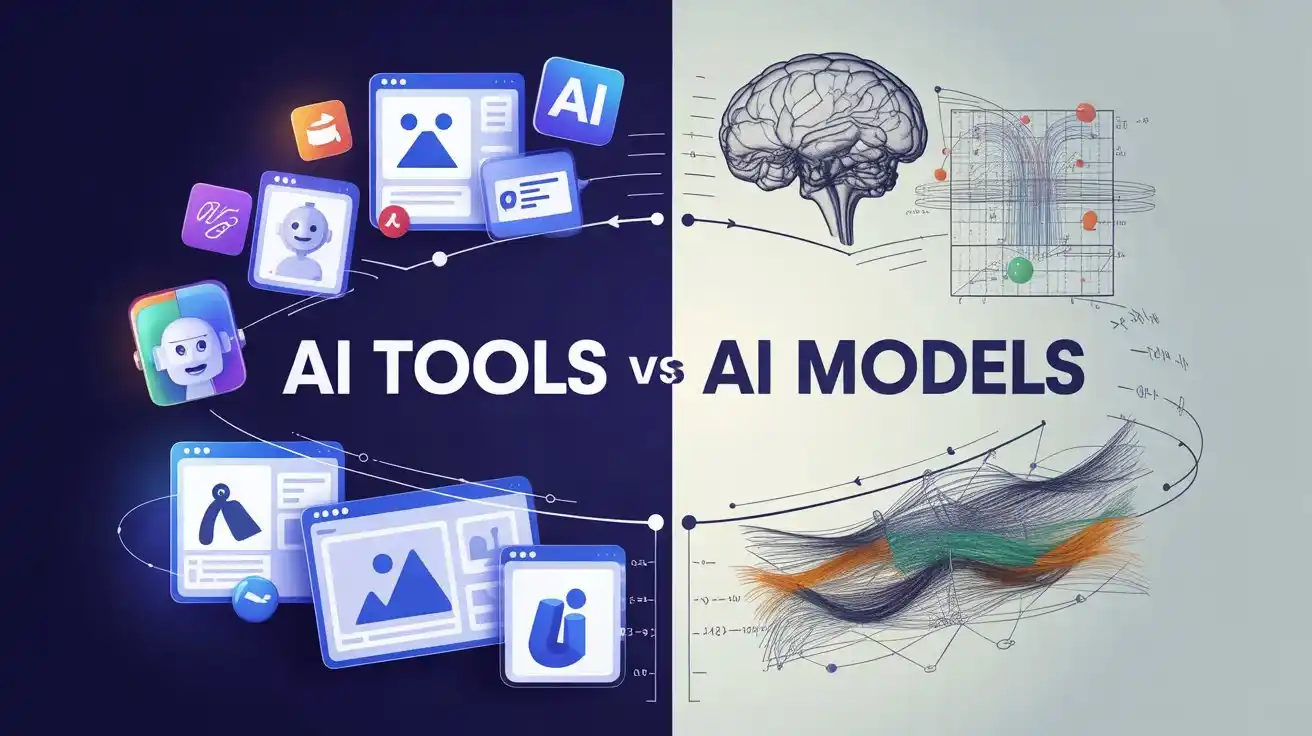
ML versus AI tools is the wrong debate
A common question is:
Should I learn ML or just rely on AI tools?
This is the wrong comparison.
AI tools are accelerators. Machine Learning knowledge is steering.
People with ML understanding:
Prompt more effectively
Set better constraints
Ask better follow-up questions
Catch errors earlier
Build more reliable systems
AI rewards those who understand how it works, even at a high level.
The ML skills that actually matter in 2026
You do not need to master everything. Focus on skills with real-world payoff.
Conceptual foundations you must understand
These are non-negotiable:
Supervised, unsupervised, and reinforcement learning
Overfitting and underfitting
Bias, variance, and data leakage
Model evaluation metrics and their limitations
These concepts shape how you think about AI.
Practical ML workflows
This is where most real-world ML lives:
Data cleaning and preprocessing
Feature engineering basics
Training versus inference pipelines
Model monitoring and performance drift
Responsible handling of edge cases
Understanding workflows helps you connect ML to production systems.
Model usage instead of model invention
In 2026, you rarely invent new algorithms.
You need to:
Compare pre-trained models
Fine-tune models for specific tasks
Evaluate trade-offs realistically
Decide when simpler models outperform complex ones
This is applied ML, and it is far more valuable than theory-heavy study.
Do you need heavy math to learn ML in 2026?
This question scares many beginners.
The honest answer:
You do not need advanced math to start, but you cannot skip understanding entirely.
You can safely:
Avoid formal proofs
Skip deriving algorithms line by line
Learn through intuition and visual explanations
But you should understand:
What assumptions models make about data
How distributions affect predictions
Why optimization sometimes fails
What uncertainty really means in ML outputs
This level of math awareness prevents costly mistakes.
The most common mistake people make while learning ML
Many learners still follow outdated paths:
Starting with abstract math
Writing algorithms from scratch immediately
Learning without real datasets
Studying ML without a clear problem
This approach leads to burnout and confusion.
The smarter approach in 2026:
Start with a real-world problem
Use existing models and tools
Learn theory only when needed
Validate results with real data
Iterate and improve
Machine Learning should feel practical, not academic.
How AI assistants change the way you learn ML
AI assistants now act as learning amplifiers.
They help you:
Explain concepts in plain language
Debug ML pipelines faster
Explore alternative modeling approaches
Understand errors and unexpected results
But AI assistants assume you can judge correctness.
ML knowledge allows you to:
Verify outputs
Spot hallucinations
Ask the right clarifying questions
Avoid overconfidence in automated suggestions
This combination is extremely powerful.
So do you really need to learn ML in 2026?
Here is the clear, no-nonsense answer.
You do not need ML if:
You only want to use AI tools
Your role does not involve AI-driven decisions
You are not responsible for model outcomes
You absolutely should learn ML if:
You want long-term leverage in AI
You want to build or customize AI systems
You want credibility beyond surface-level AI usage
You want to future-proof your career as tools evolve
ML is no longer a gatekeeper skill, but it is still a power skill.
Final takeaway: the smart way to think about ML in 2026
Machine Learning in 2026 is not about competing with AI tools. It is about thinking at a level where AI tools become reliable partners instead of black boxes.
The biggest shift is this:
ML is no longer about how models are built. It is about how models are used, evaluated, and trusted.
If you learn ML the old way, focusing only on equations and algorithms, you will struggle to see relevance. If you learn ML the modern way, focusing on real problems, real data, and real decisions, it becomes one of the most valuable skills you can have in the AI era.
You do not need to know everything.
You do need to know enough to:
Ask better questions than AI
Recognize when AI is wrong
Make informed decisions using AI outputs
Design systems that remain reliable over time
In a world full of AI tools, judgment becomes the real skill. Machine Learning trains that judgment.
That is why learning ML in 2026 is not about survival. It is about leverage, clarity, and long-term relevance.
You may like related articles...


Subscribe & Get Free Starter Pack
Subscribe and get 3 of our most templates and see the difference they make in your productivity.
Free Starter-Pack
Includes: Task Manager, Goal Tracker & AI Prompt Starter Pack
We respect your privacy. No spam, unsubscribe anytime.