Wordware Review: AI Agent Builder That Works Like a Document
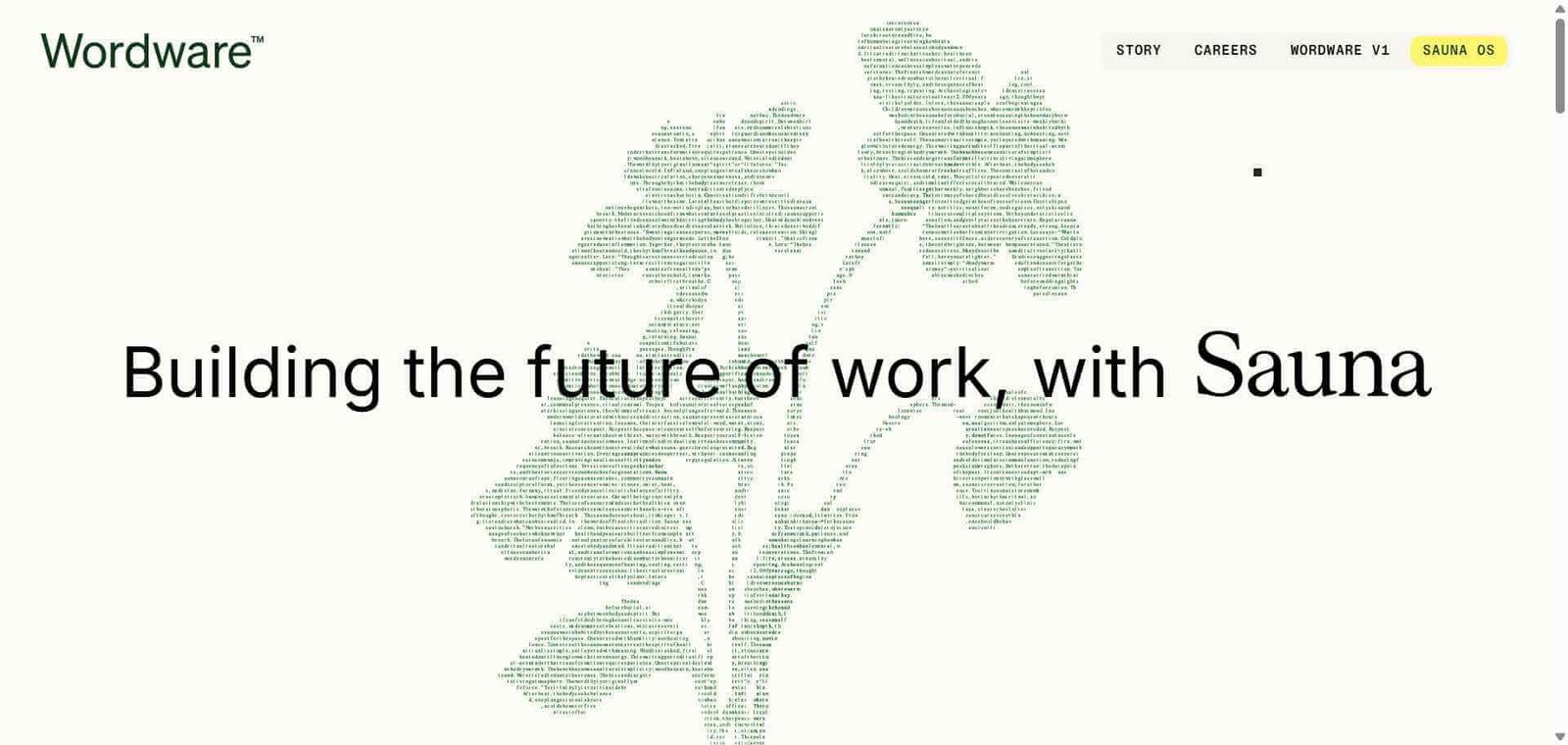
Most AI agent builders require developers to write code in complex frameworks. Wordware takes a fundamentally different approach: it lets anyone build an AI agent in a document-style interface that looks and feels like a rich text editor rather than a development environment. You write your prompts, add variables, include conditional logic, and connect external tools, all within a format that non-technical team members can read, understand, and contribute to. It is the most accessible serious AI agent builder available.
Quick Summary
Wordware is a no-code AI agent and LLM application builder that uses a collaborative document-style interface, allowing technical and non-technical team members to build, iterate, and deploy AI agents together without writing code.
Is it worth using? Yes for teams wanting to build AI agents collaboratively without a developer-only codebase that non-technical members cannot contribute to or understand.
Who should use it? Product teams, operations teams, and individuals who want to build custom AI workflows and agents without deep technical skills.
Who should avoid it? Teams that need the most complex multi-tool agent architectures or those already deeply invested in code-based frameworks like LangChain.
Verdict Summary
Best for
Cross-functional teams building AI workflows collaboratively across technical and non-technical members
Operators and product people who want to own their AI agent logic without depending on developers
Startups building and iterating on AI features quickly without formal engineering resources
Not for
Teams requiring the most complex multi-agent orchestration architectures
Developers who prefer code-based frameworks and version control workflows
Enterprise teams with strict security requirements for on-premises deployment
Rating ⭐⭐⭐⭐ 4.3 / 5
What Is Wordware?
Wordware is an AI agent development platform founded in 2023 and backed by Y Combinator. Its core insight is that the primary barrier to AI agent adoption is not capability but accessibility: most agent-building tools require software engineering skills that the people with the most domain knowledge often do not have. By making the agent definition look like a collaborative document rather than a codebase, Wordware allows the people closest to the problem to directly build the solution.
The platform supports multiple leading LLMs, allows importing external tools and APIs, and generates a deployable API endpoint for each completed agent automatically. Teams can publish agents as standalone applications or embed them into existing products via API.
How Wordware Works
Create a new AI program at wordware.ai. The interface opens as a document where your agent logic lives.
Write your prompt structure. Use the document editor to write instructions, define input variables, add conditional logic blocks, and specify how the agent should reason through its task.
Add tool integrations. Connect external tools such as web search, code execution, or custom APIs by adding tool blocks into the document flow.
Test iteratively. Run the agent directly from the editor with test inputs and review the output immediately to refine the logic.
Collaborate with your team. Invite colleagues who can comment, suggest changes, and contribute to the agent logic in the same document interface.
Deploy as an API. Wordware generates a deployable API endpoint for your agent that you can integrate into existing applications or expose as a standalone tool.
Key Features
Document-style AI agent builder accessible to non-technical team members
Multi-LLM support including GPT-4o, Claude, Gemini, and Llama
Tool integration for web search, code execution, and custom APIs
Collaborative editing with comments and team contributions
Automatic API endpoint generation for each completed agent
Version history for tracking changes to agent logic
Template library of pre-built agent starting points
Loops, conditionals, and branching logic in a readable format
Real-World Use Cases
Content generation workflows: Build a structured content agent that takes a topic, researches it via web search, and produces a formatted draft following your specific guidelines.
Data enrichment: Create an agent that takes a company name, searches for relevant information across multiple sources, and returns a structured enrichment profile.
Customer support automation: Build a support agent that classifies incoming queries, retrieves relevant knowledge base content, and drafts appropriate responses for human review.
Internal process automation: Encode complex multi-step operational processes as AI agents that team members can run without needing to understand the underlying logic.
Some advanced tool integrations require configuration
Automatic API deployment removes engineering overhead
Free plan limited in execution credits
Y Combinator backing signals strong product trajectory
Community and documentation still developing
Pricing & Plans
Free — $0/month
100 execution credits per month
Access to core agent building features
Basic tool integrations
Community support
Starter — $19/month
1,000 execution credits per month
All core features
Priority support
Team collaboration
Pro — $79/month
5,000 execution credits per month
All Starter features
API deployments
Advanced tool integrations
Custom model connections
Enterprise — Custom pricing
Unlimited executions
Dedicated infrastructure
SSO and security controls
SLA guarantees
Best Alternatives & Comparisons
Dify — More powerful open-source agent builder with self-hosting option, steeper learning curve
Gumloop — Visual workflow automation with similar accessibility goals, different interface model
Manus AI — Consumer-facing autonomous agent product, not a platform for building agents
AI Agent Builder — Similar no-code approach with a different workflow model
Frequently Asked Questions (FAQ)
What is Wordware?
Wordware is a no-code AI agent builder that uses a collaborative document-style interface, allowing technical and non-technical team members to build and deploy AI agents and LLM applications together.
Is Wordware free?
Yes, Wordware offers a free plan with 100 execution credits per month. Paid plans start at $19/month with 1,000 credits and team collaboration features.
Do I need to code to use Wordware?
No, Wordware is specifically designed to allow non-developers to build AI agents through its document-style interface. Some technical understanding of how LLMs work is helpful but not required.
What AI models does Wordware support?
Wordware supports multiple leading models including GPT-4o, Claude, Gemini, and Llama, allowing teams to choose the best model for their specific agent use case.
How does Wordware deploy AI agents?
Wordware automatically generates a deployable API endpoint for each completed agent, which teams can integrate into existing applications or access directly as a standalone service.
Is Wordware backed by investors?
Yes, Wordware is a Y Combinator company, backed through the YC program along with additional venture investment from prominent AI-focused investors.
Final Recommendation
Wordware is the most accessible path to building real AI agents for teams where not everyone is a software engineer. The document interface is not a compromise on capability but a genuine improvement in collaborative accessibility that code-based frameworks cannot offer. For product and operations teams that want to own their AI logic directly without a developer bottleneck, the Starter plan at $19/month is a highly efficient investment.