Groq Review: AI Inference Platform That Makes LLMs Respond Instantly
Speed is the constraint that defines where AI can and cannot be used in production. A model that takes 30 seconds to respond cannot power a real-time customer conversation. A model that takes 10 seconds cannot be embedded in a coding assistant without disrupting workflow. Groq has built hardware and software specifically to eliminate that constraint, producing inference speeds for open-source language models that are 10 to 100 times faster than standard GPU-based providers. The practical result is AI that feels instantaneous.
Quick Summary
Groq is an AI inference platform that runs open-source language models including Llama, Mixtral, and Gemma at speeds that are dramatically faster than any GPU-based alternative, enabling real-time AI applications that standard cloud inference cannot support.
Is it worth using? Yes for developers building latency-sensitive AI applications. Also worth using as a free fast alternative to ChatGPT for personal AI use. Who should use it? Developers building real-time AI applications, technical users who need fast inference on open-source models, and teams evaluating AI infrastructure providers. Who should avoid it? Teams that need proprietary models like GPT-4o or Claude, which are not available on Groq.
Verdict Summary
Best for
Developers building real-time AI features where latency is critical
Technical users who want the fastest possible response from open-source models
Teams prototyping AI applications and needing fast iteration cycles
Not for
Teams requiring GPT-4o, Claude, or other proprietary models
Users who prioritise model capability over response speed
Enterprise teams needing comprehensive managed AI platform services
Rating ⭐⭐⭐⭐½ 4.5 / 5
What Is Groq?
Groq is an AI infrastructure company founded in 2016 by Jonathan Ross, one of the engineers behind Google’s original TPU (Tensor Processing Unit). Rather than using GPUs for AI inference, Groq built its own chip called the Language Processing Unit (LPU), designed from the ground up for the specific computational patterns of transformer model inference. The result is inference speeds that GPU clusters cannot match for the types of sequential token generation that large language models require.
Groq’s cloud platform, GroqCloud, makes this speed accessible via API, allowing developers to run Llama 3.1, Mixtral 8x7B, Gemma 2, and other open-source models at speeds that make responses feel genuinely instantaneous. The free tier is generous enough for significant personal and development use.
How Groq Works
Sign up at groq.com. Create a free account to access GroqCloud and generate an API key.
Use the playground or API. Test models directly in the web playground or integrate Groq into your application using the REST API or Python SDK.
Select your model. Choose from available open-source models including Llama 3.1 405B, Llama 3.1 70B, Mixtral 8x7B, Gemma 2, and others.
Send inference requests. Make API calls using an interface compatible with the OpenAI SDK, making it easy to swap Groq in for OpenAI in existing codebases.
Experience the speed. Responses arrive at speeds of 500 to 800 tokens per second on LPU hardware, compared to 30 to 100 tokens per second on typical GPU inference.
Monitor usage. Track API usage and manage rate limits from the GroqCloud dashboard.
Key Features
LPU hardware delivering 500 to 800 tokens per second inference speed
Support for leading open-source models including Llama 3.1 405B, Mixtral, and Gemma 2
OpenAI-compatible API allowing easy migration from existing OpenAI integrations
Generous free tier for personal and development use
Low latency suitable for real-time conversational and streaming applications
Python SDK and REST API access
GroqChat consumer interface for direct model access without coding
Real-World Use Cases
Real-time conversational AI: Build customer service or assistant applications where response latency affects user experience and engagement.
Coding assistants: Power in-editor AI coding tools where slow response times break the development flow.
Streaming AI pipelines: Process high-volume inference requests in streaming applications where throughput and latency both matter.
Rapid prototyping: Use the fast iteration cycle on Groq to test prompts and model behaviours quickly during AI application development.
Fastest inference speeds available for open-source models
Limited to open-source models, no GPT-4o or Claude
OpenAI-compatible API simplifies migration
Model selection smaller than full-service providers
Generous free tier for personal and development use
Infrastructure still scaling, occasional rate limits
LPU hardware is a genuine architectural innovation
Less comprehensive managed platform than AWS or Azure AI
GroqChat provides instant consumer access without code
Context window limits on some models
Pricing & Plans
Free — $0/month
Generous rate limits for personal and development use
Access to all available models
GroqChat web interface
API access included
Pay as you go — Production pricing
Llama 3.1 8B from $0.05 per million tokens
Llama 3.1 70B from $0.59 per million tokens
Llama 3.1 405B from $2.99 per million tokens
Mixtral 8x7B from $0.24 per million tokens
Enterprise — Custom pricing
Higher rate limits
Dedicated capacity
SLA guarantees
Priority support
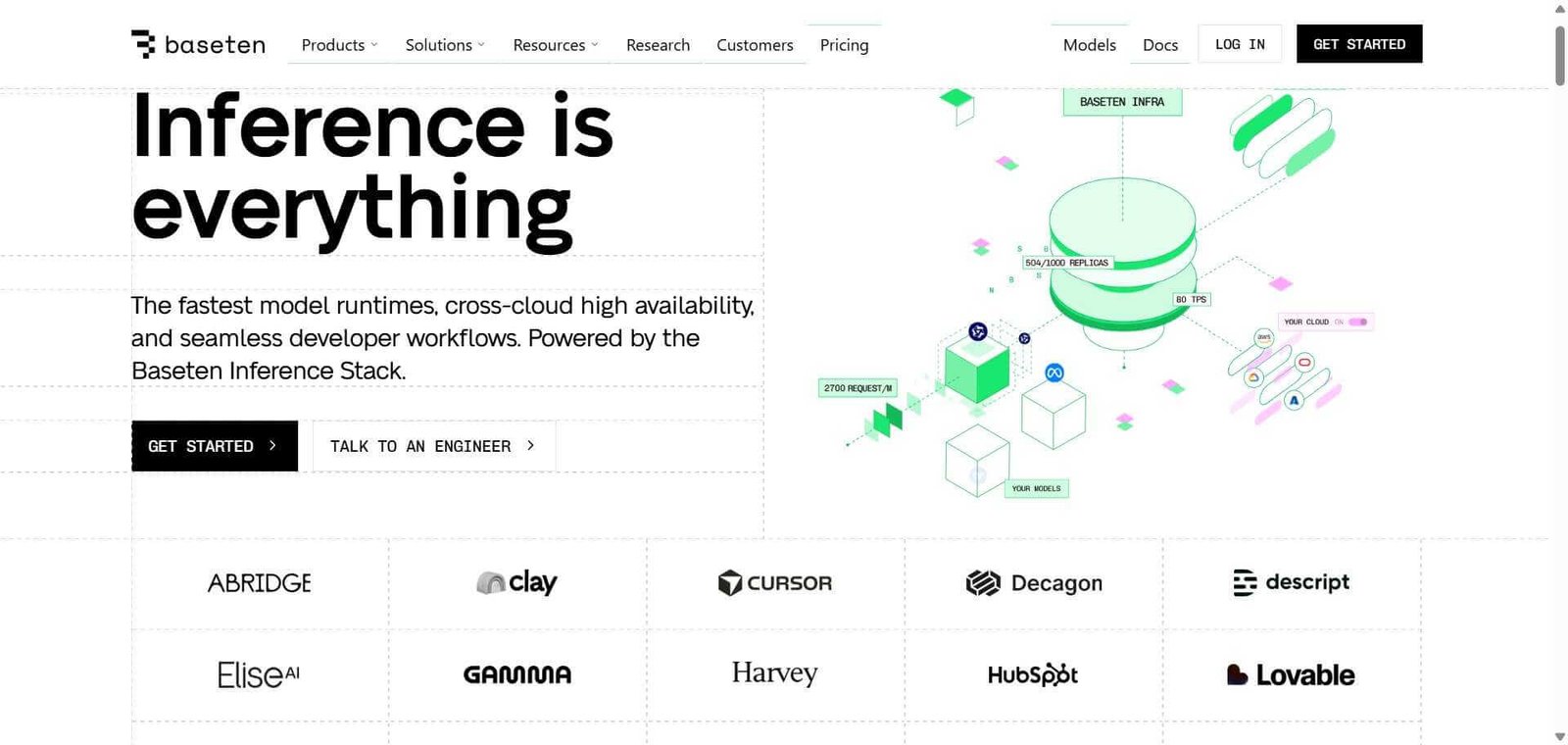
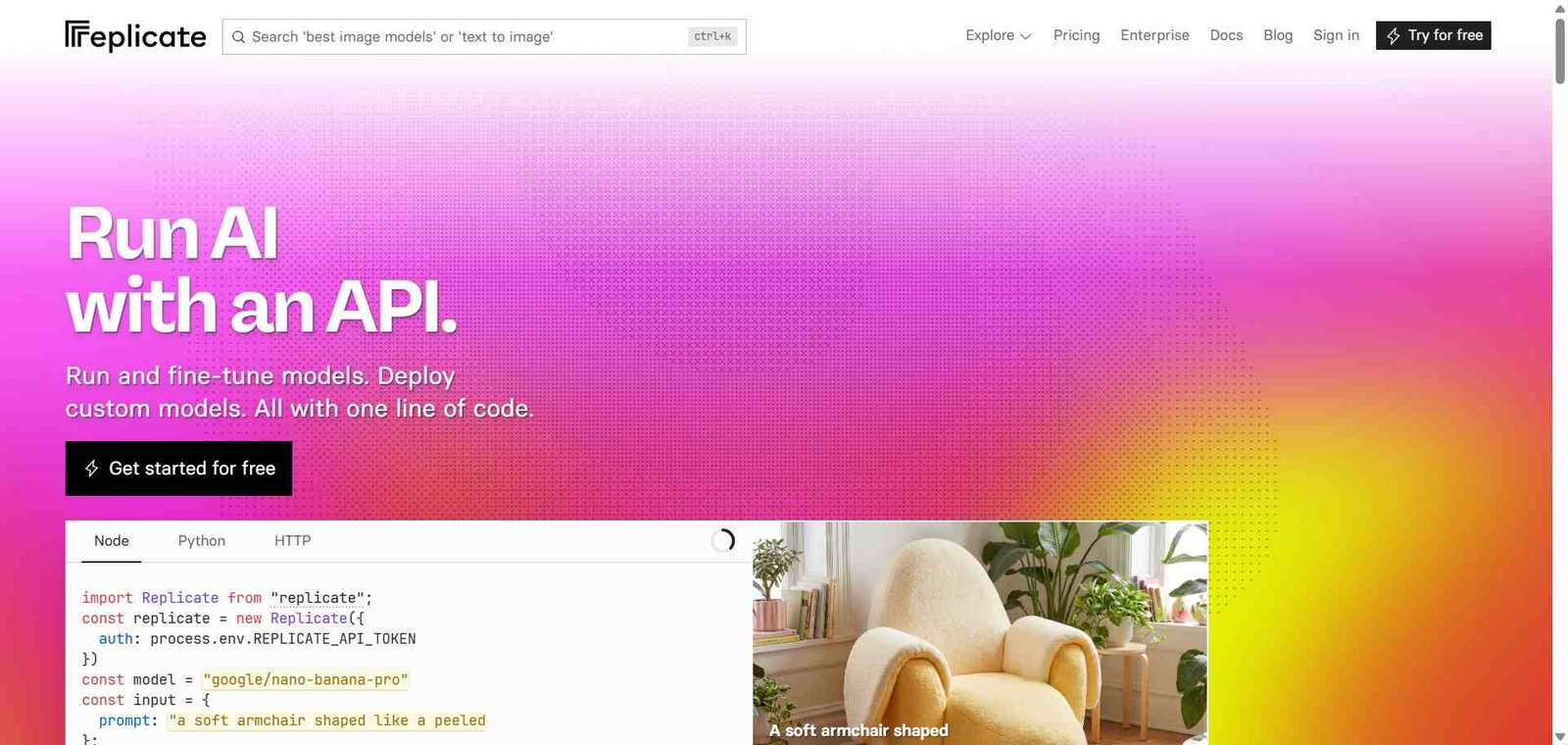
Best Alternatives & Comparisons
Together AI — Similar open-source model inference platform with different hardware and a broader model catalogue
OpenAI — More capable proprietary models, much slower inference on complex tasks
Mistral AI — Offers their own models directly with moderate inference speeds
Hugging Face — Broader model ecosystem with more deployment flexibility, slower standard inference
Frequently Asked Questions (FAQ)
What is Groq?
Groq is an AI inference platform that uses custom LPU hardware to run open-source language models at dramatically faster speeds than GPU-based alternatives, making AI responses feel instantaneous.
Is Groq free?
Yes, Groq offers a generous free tier with rate limits suitable for personal use and development. Production usage is pay-per-token with no monthly minimum.
What is an LPU?
A Language Processing Unit is a custom chip designed by Groq specifically for the sequential token generation patterns of large language model inference. Unlike GPUs, which are general-purpose parallel processors, the LPU is optimised for the specific computation pattern of transformer inference.
What models are available on Groq?
Groq supports open-source models including Llama 3.1 at 8B, 70B, and 405B parameter sizes, Mixtral 8x7B, Gemma 2, and others. Proprietary models from OpenAI or Anthropic are not available on Groq.
Is Groq compatible with the OpenAI API?
Yes, Groq’s API uses an OpenAI-compatible interface, allowing developers to point existing OpenAI integrations to Groq by changing the base URL and API key with minimal code changes.
How fast is Groq compared to ChatGPT?
Groq typically delivers 500 to 800 tokens per second, compared to approximately 30 to 100 tokens per second on OpenAI’s standard inference. For practical purposes this means responses that feel immediate rather than streaming character by character.
Final Recommendation
Groq is the most compelling infrastructure choice for any developer who has accepted slow inference as an unavoidable constraint of production AI applications. The speed difference is not marginal and it genuinely opens up application categories that standard GPU inference cannot serve. The free tier is generous enough for any developer to test Groq in their specific use case immediately with no commitment.