
Greptile
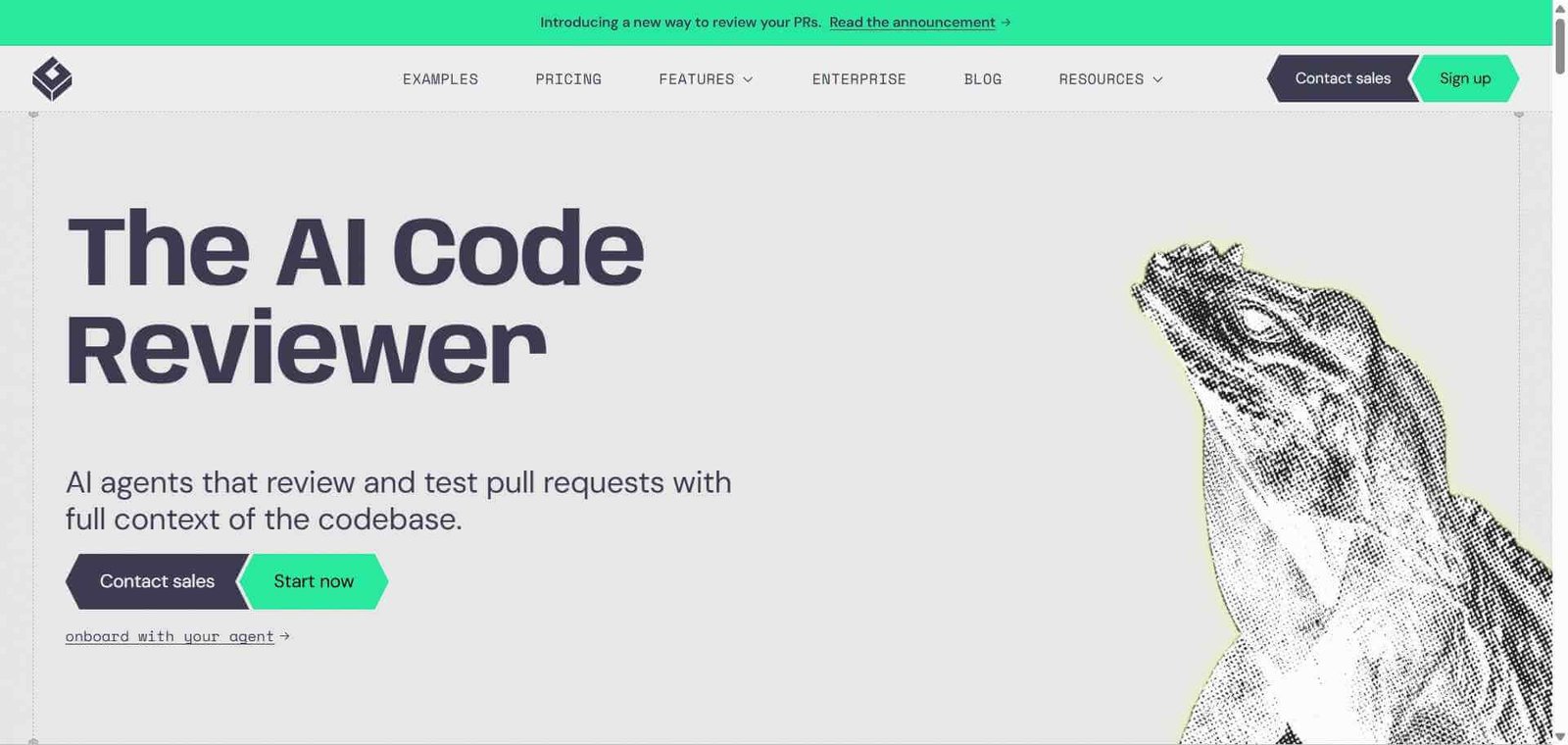
Greptile is an AI code review tool that analyses pull requests using full-codebase context to detect bugs, security risks, logical errors and broken dependencies before code reaches production.
Greptile Review: Features, Pricing, Pros, Cons and Alternatives
Greptile is an AI-powered code review platform that analyses pull requests using context from the entire codebase. It helps development teams identify potential bugs, security issues, broken dependencies and logical errors before merging code.
Unlike tools that primarily inspect changed lines, Greptile builds a graph index of files, functions and dependencies to understand how code changes may affect other parts of an application. It also offers multi-agent reviews, custom coding rules, developer feedback learning and runtime validation through TREX.
Greptile is worth considering for software teams managing complex repositories and frequent pull requests. However, individual developers working on smaller projects may find its paid plans unnecessary. It should complement human code reviews, automated tests and security tools rather than replace them.
Quick Verdict
Greptile is a specialised AI code review tool designed to help developers catch problems that conventional pull request reviews may overlook.
Its main differentiator is repository-wide context. Instead of examining only the lines changed in a pull request, it considers relationships between files, functions and dependencies. This can be particularly useful when a small code change affects multiple components.
Best for:
Engineering teams handling frequent pull requests.
Startups building and maintaining complex applications.
Developers working with AI coding assistants.
Teams that want consistent coding standards across repositories.
Organisations looking for additional code validation before merging.
Not ideal for:
Developers looking primarily for AI code generation or autocomplete.
Small projects with infrequent code changes.
Teams that only need basic linting and formatting.
Organisations unwilling to grant repository access to an external code review platform.
Pricing: Free Starter plan, Pro at $30 per developer/month, and custom Enterprise pricing.
Our rating: 8.2/10
This is an editorial assessment based on product capabilities, pricing structure, integration options, security considerations and available customer feedback. It is not a result of independent hands-on testing.
What Is Greptile?
Greptile is an AI code review platform that automatically examines pull requests and identifies potential problems using information from the wider codebase.
Traditional code reviews depend heavily on developers understanding how individual changes interact with existing application logic. This becomes difficult as projects grow, particularly when different teams maintain interconnected services, APIs and dependencies.
For example, imagine a developer changes an authentication function in a backend application. The modified function may also be used by several API endpoints, middleware components and internal services.
A reviewer examining only the modified file might miss an issue affecting another part of the application.
Greptile attempts to address this problem by building a graph index of the repository. It maps files, functions and dependencies, giving its review agents additional context when analysing proposed changes.
Its capabilities extend beyond basic pull request comments:
AI pull request reviews: Identifies potential logical errors, broken dependencies and security issues.
Repository indexing: Builds a graph of the codebase to understand relationships between different components.
Custom coding rules: Allows teams to define repository-specific coding standards in plain English.
Learning from feedback: Uses engineers’ PR comments to understand team conventions.
TREX runtime validation: Runs pull request branches in a sandbox to identify issues that appear during execution.
Coding agent integrations: Connects review findings with tools such as Claude Code, Cursor, Codex and Devin.
PR workflow management: Provides additional visibility into merge status, code changes and review findings.
Greptile is particularly relevant to teams using AI coding assistants. Generating code faster does not guarantee that the code is correct or compatible with an existing application. An independent review layer can help identify issues before those changes reach production.
How Does Greptile Work?
Greptile follows a repository indexing and pull request review workflow.
1. Connect your code repository
Connect a supported Git provider and select the repositories you want Greptile to review. Its official materials describe integrations with GitHub, GitLab and Bitbucket.
2. Index the codebase
Greptile builds a graph representing files, functions and dependencies. This gives its review agents information about how different components relate to one another.
3. Analyse pull requests
When a developer submits a pull request, Greptile examines the changes and uses the indexed repository context to investigate their potential impact.
4. Generate review comments
The platform identifies potential problems and posts findings against relevant sections of the pull request. Developers can inspect the comments and decide whether changes are necessary.
5. Incorporate developer feedback
Greptile uses engineers’ comments to understand repository-specific practices and coding expectations.
6. Resolve issues using coding agents
Developers can send findings to supported coding agents, allowing them to investigate and work on potential fixes.
This workflow is designed to reduce repetitive review work, but developers still need to verify findings and approve important changes.
Key Features
1. Repository-Wide Codebase Indexing
Greptile creates a graph of files, functions and dependencies to understand the structure of a repository.
This is useful when a pull request modifies a function that other services depend on. Instead of treating the change in isolation, Greptile can investigate its wider implications.
However, repository context does not guarantee that every architectural or logical issue will be identified.
2. Multi-Agent Pull Request Reviews
Greptile uses multiple AI agents to review pull requests and investigate potential problems.
This approach is relevant for large changes involving several files, where different parts of a change may require separate investigation.
The additional analysis can also increase credit consumption, so teams should consider whether deeper reviews are necessary for every pull request.
3. Custom Coding Rules
Teams can write their own review instructions in plain English.
For example, an engineering team can specify that API endpoints must validate incoming requests, authentication checks must follow internal conventions, or certain functions should not be called directly.
This helps maintain consistency across repositories, particularly when multiple developers contribute to the same application.
4. Learning From Developer Feedback
Greptile learns from engineers’ PR comments to understand how their team approaches code reviews.
This can help align future feedback with established coding conventions.
However, teams should not assume that the system will automatically understand every architectural decision or business requirement simply through repeated use.
5. TREX Runtime Validation
TREX extends code review beyond static inspection.
It runs pull request branches in a sandbox to identify bugs that may only appear when the code executes. The platform can attach supporting evidence, including logs, screenshots and traces, to its review findings.
Greptile has reported approximately 20% more bugs caught when using TREX. This is a vendor-reported result, not an independently verified benchmark.
For engineering teams, the important distinction is that runtime validation can reveal execution-related problems that ordinary code inspection may not catch. It should still be used alongside existing test suites.
6. PR Inbox and Merge Status
Greptile introduced a PR inbox in November 2026 to give developers a more centralised view of their pull request workflow.
Its functionality includes:
Merge status showing CI checks, merge conflicts, approvals and Greptile review status.
A consolidated view of pull requests requiring attention.
Better visibility into outstanding review activity.
This is useful for developers managing several open pull requests who want to identify which changes are ready for review or merging.
7. Code Tour and Coding Agent Handoff
The Code Tour feature groups related changes and explains what they do, alongside relevant issues.
Greptile also supports handing identified problems to coding agents to help developers investigate and resolve them.
This creates a more connected workflow between identifying a potential bug, understanding the affected changes and working on a fix.
8. Enterprise Security and Deployment
Greptile offers enterprise capabilities for organisations with stricter infrastructure and access requirements.
These include:
Self-hosted deployment, including air-gapped environments.
SOC 2 compliance.
SSO and SAML.
Role-based access control.
Audit logs.
Dedicated support.
Enterprise Git integrations and data residency options.
Teams evaluating Greptile for private or sensitive repositories should review its security documentation, repository permissions, data retention policies and third-party LLM processing arrangements before granting access.
How Good Is Greptile at Finding Bugs?
A code review tool should not be evaluated by the number of comments it generates. The important question is whether its findings identify genuine problems that developers would otherwise miss.
We have not independently connected a repository or benchmarked Greptile’s detection accuracy. Therefore, the following is a practical evaluation framework rather than a claim of completed product testing.
Here are six areas worth testing before adopting the platform.
| Test scenario | What to evaluate |
|---|---|
| Cross-file changes | Does it identify issues involving functions or services outside modified files? |
| Authentication changes | Does it flag potential permission and access-control problems? |
| API modifications | Does it detect breaking changes and missing validation? |
| AI-generated code | Can it identify logical errors in code generated by Cursor or Claude Code? |
| False positives | How many findings are genuinely actionable? |
| Review time | Does it reduce the time developers spend reviewing pull requests? |
TREX deserves separate evaluation. Its sandbox execution approach can help identify problems that only become visible at runtime. Compare its findings against your existing automated tests to understand whether it provides additional coverage.
For a meaningful evaluation, run the same representative pull requests through your existing review process and Greptile. Record actionable findings, missed issues, false positives and time spent resolving comments.
This will give engineering teams a more useful picture of Greptile’s value than relying on the number of issues it reports.
Greptile Use Cases
Greptile is most relevant when code changes are frequent and the wider application context matters.
For startup founders: Add an additional review layer when a small engineering team handles multiple development tasks and repositories.
For software developers: Investigate potential bugs involving dependencies, functions and files outside the modified code.
For engineering managers: Apply consistent coding rules and monitor pull request activity across development teams.
For AI-assisted development teams: Review code generated by Cursor, Claude Code and other coding agents before merging.
For enterprise teams: Add repository-level review and runtime validation to existing development workflows.
For teams maintaining legacy applications: Examine changes against existing code relationships, where modifications can have unexpected effects elsewhere.
Pros and Cons
Greptile offers several advantages for teams managing complex codebases, but its pricing and reliance on AI-generated findings deserve consideration.
| Pros | Cons |
|---|---|
| Analyses code with wider repository context | Findings still require human verification |
| Multi-agent reviews for complex changes | Deeper reviews consume more credits |
| Custom rules for team-specific standards | Repository indexing adds an initial setup step |
| Integrates with popular coding agents | May be excessive for small projects |
| TREX provides runtime validation | Runtime validation does not replace full testing |
| Enterprise deployment options | Enterprise pricing requires a sales enquiry |
The main trade-off: Greptile can provide an additional layer of code analysis, but teams must balance review depth, credit consumption and the effort required to validate its findings.
Pricing & Plans
Greptile uses a credit-based pricing model for its paid plans. The main difference between plans is the number of developers supported, included credits and enterprise capabilities.
Starter: Free
Designed for individual developers evaluating the platform.
One active developer.
50 free credits per month.
Unlimited repositories.
Pro: $30 per developer/month
Designed for development teams.
Unlimited developers and agents.
50 credits per developer.
Additional credits at $1 each.
Unlimited repositories.
Learning and custom context.
Knowledge Base MCP.
Cross-repository context.
Team analytics dashboard.
Jira, Linear, Notion and coding agent integrations.
14-day free trial.
Enterprise: Custom Pricing
Designed for larger organisations with additional infrastructure and security requirements.
Everything in Pro.
Self-hosted deployment.
SSO and SAML.
Role-based access control.
Enterprise Git integrations.
Security and compliance reviews.
Dedicated Slack support.
Custom invoicing and contractual terms.
How Far Do 50 Credits Go?
Greptile offers different review depths, with different credit requirements.
| Review type | Credits | Reviews from 50 credits |
|---|---|---|
| Base | 1 | 50 |
| Plus | 3 | 16 |
| Apex | 10 | 5 |
These are theoretical maximums if all credits are used for one review type.
For example, a developer using:
20 Base reviews = 20 credits.
5 Plus reviews = 15 credits.
1 Apex review = 10 credits.
Total consumption: 45 credits.
This leaves five credits from the monthly allowance.
What Does Greptile Cost for Five Developers?
A team of five developers on Pro would pay:
Five developer seats × $30 = $150/month.
Included credits: 250/month.
Additional credits: $1 each.
This is the base subscription cost before additional credit purchases.
For teams reviewing several pull requests daily, actual costs will depend on review depth and monthly usage.
Additional Discounts and Free Access
Greptile also lists special programmes:
Open-source projects: Free access for qualifying non-commercial projects using an OSI-approved licence.
Early-stage startups: Eligible pre-Series A startups with 20 or fewer employees and less than $2 million in revenue over the preceding 12 months can apply for 500 free credits per month for six months.
Who should pay?
Pro is worth evaluating for teams that regularly review complex pull requests and need custom rules, cross-repository context and developer integrations.
Who should avoid upgrading?
Individual developers and teams with limited monthly pull requests should begin with the free plan. Upgrade only when the additional review capabilities justify the subscription and credit costs.
Pricing and eligibility should be confirmed on Greptile’s official pricing page before purchasing.
Best Alternatives & Comparisons
Greptile competes with several AI code review and software development platforms. However, these tools approach code quality and developer workflows differently.
| Tool | Main strength | Best suited for |
|---|---|---|
| Greptile | Repository graph and contextual PR reviews | Complex codebases |
| CodeRabbit | Automated PR feedback and review workflows | Teams wanting automated reviews |
| Qodo | Code integrity, testing and review | Quality-focused engineering teams |
| GitHub Copilot | AI assistance within GitHub workflows | Existing Copilot users |
| Cursor Bugbot | Bug detection in Cursor workflows | Cursor-centric teams |
| Graphite | Stacked PRs and code review workflows | Teams using structured PR workflows |
Greptile vs CodeRabbit
CodeRabbit is an alternative for teams looking for automated pull request feedback and structured review workflows.
Greptile is particularly interesting when repository-wide context, multi-agent analysis and custom coding standards are important.
Choose CodeRabbit if its integrations and review workflow better match your existing development environment. Consider Greptile if deeper repository context is a priority.
Greptile vs Qodo
Qodo focuses on code integrity, testing and code review.
It is worth evaluating for engineering teams that want to strengthen quality checks across the development lifecycle. Greptile has a more specific focus on repository-contextual pull request reviews.
The better option depends on whether your priority is broader code integrity or specialised PR review.
Greptile vs GitHub Copilot
GitHub Copilot is primarily an AI coding assistant that supports developers with code generation, explanations and development workflows.
Greptile focuses on reviewing proposed code changes and identifying potential problems.
These products address different needs and can complement one another rather than serving as direct replacements.
Greptile vs Cursor Bugbot
Cursor Bugbot provides automated bug detection within the Cursor development ecosystem.
It is a natural option for teams already using Cursor. Greptile is worth considering when developers want repository-level analysis and custom review rules.
Greptile vs Graphite
Graphite focuses on code review workflows, including stacked pull requests.
Greptile concentrates on AI-driven code analysis and repository context. Teams should compare both based on whether they need better PR workflow management or additional automated review coverage.
Git Provider Compatibility
Git provider support can be a deciding factor when selecting a code review platform.
Greptile’s published materials describe support for GitHub, GitLab and Bitbucket. Its Enterprise plan also lists additional options, including GitHub Enterprise Server, GitLab Self-Managed, Bitbucket Data Center, Gitea and Perforce with P4 Code Review for on-premises deployments.
Check the current integration documentation before choosing a tool, particularly if your team uses self-managed infrastructure.
Is Greptile Secure for Enterprise Codebases?
Repository access is one of the most important considerations when adopting an AI code review platform.
Greptile offers enterprise security features such as self-hosting, SOC 2 compliance, SSO, SAML, role-based access controls and audit logs.
However, these features alone should not determine whether an organisation approves the platform.
Before connecting private repositories, security teams should examine:
What repository permissions Greptile requires.
Whether code is stored or processed outside the organisation’s infrastructure.
Which third-party LLM providers process code and review context.
How long repository data, logs and review information are retained.
Whether customer code is used for model training.
How access is revoked when an employee or integration is removed.
Whether the available deployment model meets internal compliance requirements.
Organisations handling sensitive source code should request the relevant security documentation and data processing agreements before deployment.
Frequently Asked Questions (FAQ)
Greptile supports repository integrations through its Git provider connections. Before connecting a private repository, check the required permissions, access scope and organisation-level approval requirements in its official documentation.
Yes. The free Starter plan provides one active developer with 50 monthly credits. Small teams can evaluate its review quality before committing to the paid Pro subscription.
Yes. Greptile reviews pull requests rather than requiring developers to write code manually. This makes it relevant to teams using Cursor, Claude Code and other AI coding assistants.
Greptile and static analysis tools serve different purposes. Static analysis checks code against predefined rules, while Greptile uses AI and repository context to identify potential issues. Both can complement automated testing and human review.
No. It can reduce repetitive review work and identify potential issues, but developers should still verify findings, assess architectural decisions and approve important changes.
Final Recommendation
Greptile is a strong option for development teams that want repository-aware AI code reviews, particularly when managing complex applications and frequent pull requests.
Its graph-based indexing, multi-agent analysis, custom coding rules and TREX runtime validation make it more than a basic automated code commenter. The newer PR inbox and Code Tour features also extend its usefulness across the review workflow.
However, the credit-based pricing model deserves attention. A team reviewing many pull requests may need additional credits, and AI-generated findings still require developer verification.
For individual developers, the free plan is a sensible starting point. Small engineering teams should evaluate whether the time saved justifies the Pro subscription. Larger organisations should assess the security, deployment and access-control requirements before adopting Enterprise.
Our recommendation is to test Greptile against real pull requests before committing. Compare its actionable findings, false positives and review time with your existing workflow.
Visit Greptile’s official website or compare it with CodeRabbit and Qodo before deciding which code review platform fits your development process.