Leah Review: The Enterprise CLM That Rebranded Around Agentic AI to Go Beyond Contract Lifecycle Management
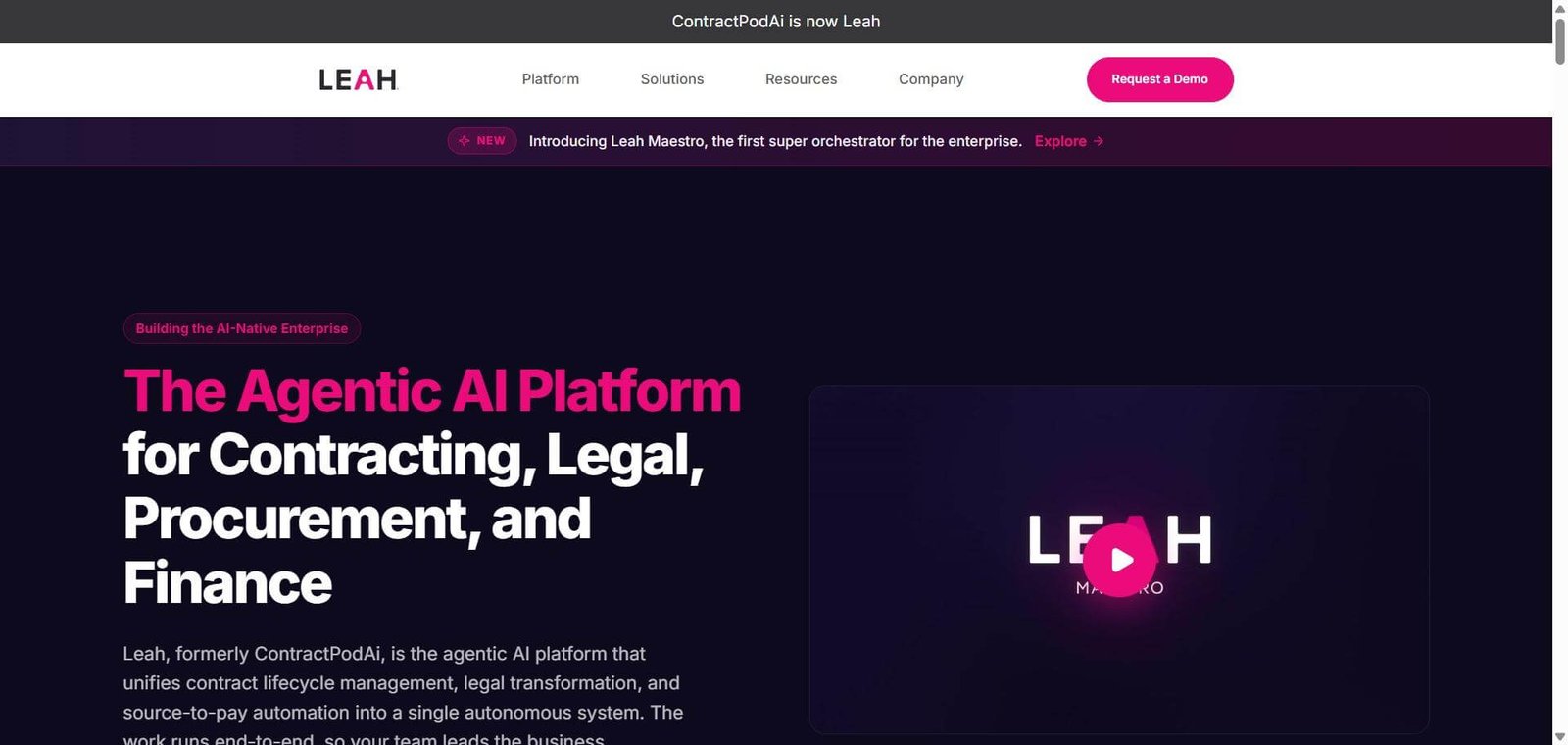
ContractPodAi spent years building one of the most capable enterprise contract lifecycle management platforms in the market — centralised repository, AI-assisted contract review, obligation tracking, and workflow automation for legal and procurement teams at large organisations. In January 2026, the company rebranded as Leah — signalling a strategic expansion beyond CLM into broader agentic AI automation across legal, procurement, and finance workflows. The Leah Agentic OS and Leah Agentic CLM reflect a platform that is explicitly positioning for the era where AI agents handle end-to-end contract workflows rather than assisting humans at individual steps. Rated 4.6/5 on G2 from 48 reviews and 4.7/5 on Gartner Peer Insights from 170 ratings, the underlying platform quality is validated — even as the rebrand signals an ambitious expansion of scope.
Quick Summary
Leah — formerly ContractPodAi, rebranded January 5, 2026 — is an enterprise AI contract lifecycle management and agentic automation platform covering contract intake, AI-assisted review and redlining against playbooks, template-based drafting, centralised repository with metadata extraction, approval workflow orchestration, and obligation and renewal tracking — with Leah Agentic OS for building AI agents across enterprise legal and procurement workflows, rated 4.6/5 on G2 and 4.7/5 on Gartner Peer Insights, enterprise pricing from approximately $50,000/year.
Is it worth using? Yes for enterprise legal and procurement teams at large organisations managing high volumes of complex contracts across multiple jurisdictions who want AI-powered CLM that covers the full contract lifecycle — particularly teams with deep Microsoft 365 integration requirements.
Who should use it? General Counsel, Legal Operations leaders, and procurement directors at Fortune 1000 and mid-market enterprises in high-tech, pharmaceutical, financial services, and communications sectors who manage significant contract volumes and want AI to automate the most time-consuming elements of the contract lifecycle.
Who should avoid it? Startups, small legal teams, and organisations with fewer than 50 contracts per month where the entry cost of approximately $50,000 per year and implementation timeline are disproportionate to contract volume — Juro or Spellbook are more appropriate.
Verdict Summary
Best for
- Enterprise legal operations teams managing large contract volumes across multiple business units and jurisdictions who want a centralised AI platform that handles intake through obligation tracking without multiple point solutions — Leah’s end-to-end CLM scope reduces the fragmentation of managing separate tools for each contract lifecycle stage
- Organisations with deep Microsoft 365 footprints who want CLM that integrates natively with the tools legal and business teams already use — Leah’s Microsoft 365 integration is a consistent differentiator cited by enterprise customers
- Legal and procurement teams moving toward agentic AI workflows where AI agents — not just AI assistants — handle end-to-end contract processes — the Leah Agentic OS positions the platform for this evolution
Not for
- Organisations with fewer than 50 monthly contracts where the entry cost and implementation timeline are disproportionate — Juro’s accessible pricing or Lexion’s faster implementation are better fits
- Legal teams whose primary need is AI contract review accuracy with published benchmark results — LegalOn has published 2026 benchmark data that Leah has not matched with comparable independent validation
- Teams wanting rapid self-serve deployment — Leah’s enterprise implementation timeline is measured in months, not days
Rating
⭐⭐⭐⭐ 4.2 / 5
What Is Leah?
Leah is the January 2026 rebrand of ContractPodAi — an enterprise contract lifecycle management company founded in 2012 in Glasgow, Scotland, with offices in London, New York, Dubai, Sydney, Glasgow, Mumbai, and Singapore. The rebrand to Leah — which stands for Lead, Empower, Accelerate, and Harmonize — reflects a strategic repositioning: from a CLM platform with AI features to an agentic AI platform for legal and procurement that includes CLM as its primary use case.
The Leah platform covers six broad functional areas: contract intake from email and business stakeholder requests, AI-assisted contract review with redline generation against firm playbooks, contract drafting from templates with AI-assisted clause selection, a searchable contract repository with metadata extraction, workflow orchestration with approval routing, and post-signing obligation and renewal tracking. The Leah Agentic OS extends this into a layer for building custom AI agents that automate workflows across legal, procurement, and finance beyond the standard CLM use cases.
How Leah Works
- Manage contract intake. Legal and business teams submit contract requests through email or a self-service portal — Leah routes incoming requests to the appropriate workflow based on contract type, value, and jurisdiction, without requiring legal team involvement for every initial intake.
- AI-assisted review and redlining. Upload third-party contracts and Leah’s AI reviews them against pre-approved playbooks — identifying non-standard clauses, flagging risk positions, and generating suggested redlines in line with the organisation’s negotiation positions.
- Draft from templates with AI assistance. Business teams self-serve on routine contract types using pre-approved templates with smart clause selection — Leah’s AI guides clause selection based on the contract context, reducing legal team involvement in standard agreement generation.
- Search and extract from the repository. All contracts store in a centralised, searchable repository with AI-extracted metadata — obligation dates, payment terms, termination clauses, and renewal windows — enabling portfolio-level reporting and obligation management without manual data entry.
- Route approvals through configured workflows. Approval routing follows configured workflows by contract type, value, and jurisdiction — escalating automatically when approval thresholds are crossed without requiring manual routing decisions.
- Track obligations and renewals. Leah monitors obligation deadlines and renewal windows — alerting the relevant contract owner before action-required dates arrive, replacing the spreadsheet tracking that produces missed obligations and auto-renewal traps.
Key Features
- End-to-end contract lifecycle management — intake, review, drafting, repository, workflow, and obligation tracking
- AI contract review with redline generation against firm-specific playbooks
- Leah Agentic OS — platform for building custom AI agents across legal, procurement, and finance workflows
- Leah Agentic CLM — AI-driven contract lifecycle automation module
- AI metadata extraction from uploaded contracts — parties, dates, payment terms, termination, and renewal provisions
- Centralised contract repository with natural language search across the full portfolio
- Microsoft 365 native integration — consistent differentiator for enterprise legal teams
- Pre-approved template library with AI-guided clause selection for business self-service
- Multi-jurisdictional and multi-language contract support for global enterprise deployments
- Custom-trained AI models on organisation-specific contract data on Enterprise tier
- Predictive analytics and contract intelligence on Enterprise tier
- Gartner CLM Visionary recognition five consecutive times
- Rated 4.6/5 on G2 from 48 reviews and 4.7/5 on Gartner Peer Insights from 170 ratings
- Enterprise pricing from approximately $50,000/year
Real-World Use Cases
- Enterprise procurement contract management: A global pharmaceutical company manages 3,000 plus supplier agreements across 30 countries. Leah’s centralised repository with AI extraction gives the procurement team real-time visibility into renewal windows and payment obligations across the full portfolio — replacing a team of contract administrators manually tracking spreadsheets, and eliminating two auto-renewal commitments worth $800,000 that had been missed the previous year.
- AI-assisted third-party review: A technology company’s legal team receives third-party MSAs, SOWs, and NDAs from customers and vendors daily. Leah reviews each incoming contract against the company’s negotiation playbook — flagging non-standard IP ownership clauses, liability caps below the acceptable threshold, and jurisdiction selections outside approved territories — before the contract reaches a lawyer for review.
- Business self-service on standard agreements: A financial services firm’s legal team processes 150 NDA requests per month from business teams. After deploying Leah’s self-service NDA generation using pre-approved templates with AI clause guidance, business teams generate NDAs independently — the legal team’s NDA workload drops by 80% and turnaround time falls from 3 days to 4 hours.
- Agentic contract workflow: A technology company uses Leah Agentic OS to build a custom AI agent that handles the full vendor onboarding contract process — from receiving a vendor request through intake, generating the appropriate contract template, routing through legal review, managing the signature workflow, and filing the executed contract in the repository — with human involvement only at the review approval step.
Pros and Cons
End-to-end CLM scope covering intake through obligation tracking — reduces the point solution fragmentation that managing separate tools for each stage createsJanuary 2026 rebrand to Leah — the official domain is leahai.com. Note: leah.com routes incorrectly to an unrelated LinkedIn profileLeah Agentic OS positions the platform for agentic AI workflows — the most forward-looking CLM positioning in the enterprise categoryAI extraction accuracy requires more manual tagging than marketing implies — users consistently report that the AI layer needs hands-on validation before relying on extracted data for critical decisionsMicrosoft 365 native integration is a consistent differentiator — legal teams can use the platform within familiar tools without a new interfaceImplementation timeline is measured in months — enterprises report delayed time-to-value, which is harder to absorb at the $50,000 to $200,000 entry cost range4.6/5 G2 and 4.7/5 Gartner Peer Insights across 170 plus ratings — sustained validation from enterprise legal and procurement usersNo published comparison of Leah AI extraction accuracy against LegalOn’s 2026 Contract Review Benchmark — buyers requiring accuracy validation must run their own pilotsGartner CLM Visionary five consecutive times — strong analyst recognition alongside user review scoresCustom-only pricing with no self-serve access or transparent published rates — all cost discussions require a full sales engagement
Pricing & Plans
Leah does not publish pricing. All plans are custom-quoted. Based on third-party procurement intelligence:
Standard — approximately $50,000 to $100,000/year
- Core CLM: intake, repository, workflow, and obligation tracking
- Basic Leah AI for contract extraction and metadata tagging
- Microsoft 365 integration
- Standard analytics
Professional — approximately $100,000 to $200,000/year
- All Standard features
- Leah AI contract review and redlining against playbooks
- Advanced workflow automation
- Priority support with faster response times
- Additional integration connectors
Enterprise — approximately $200,000 to $500,000 plus/year
- Full Leah AI suite including Leah Agentic OS
- Custom-trained AI models on organisation-specific contract data
- Predictive analytics and natural language portfolio search
- Dedicated account manager with enterprise SLAs
- Custom integrations, SSO/SCIM, full API access
First-year total cost including implementation, training, and Microsoft 365 integration fees is typically $100,000 to $300,000 for Standard and Professional tiers. Contact leahai.com for a custom quote.
Best Alternatives & Comparisons
- Ironclad — Better for high-volume contract workflow management with the deepest sales workflow integration in the enterprise CLM category
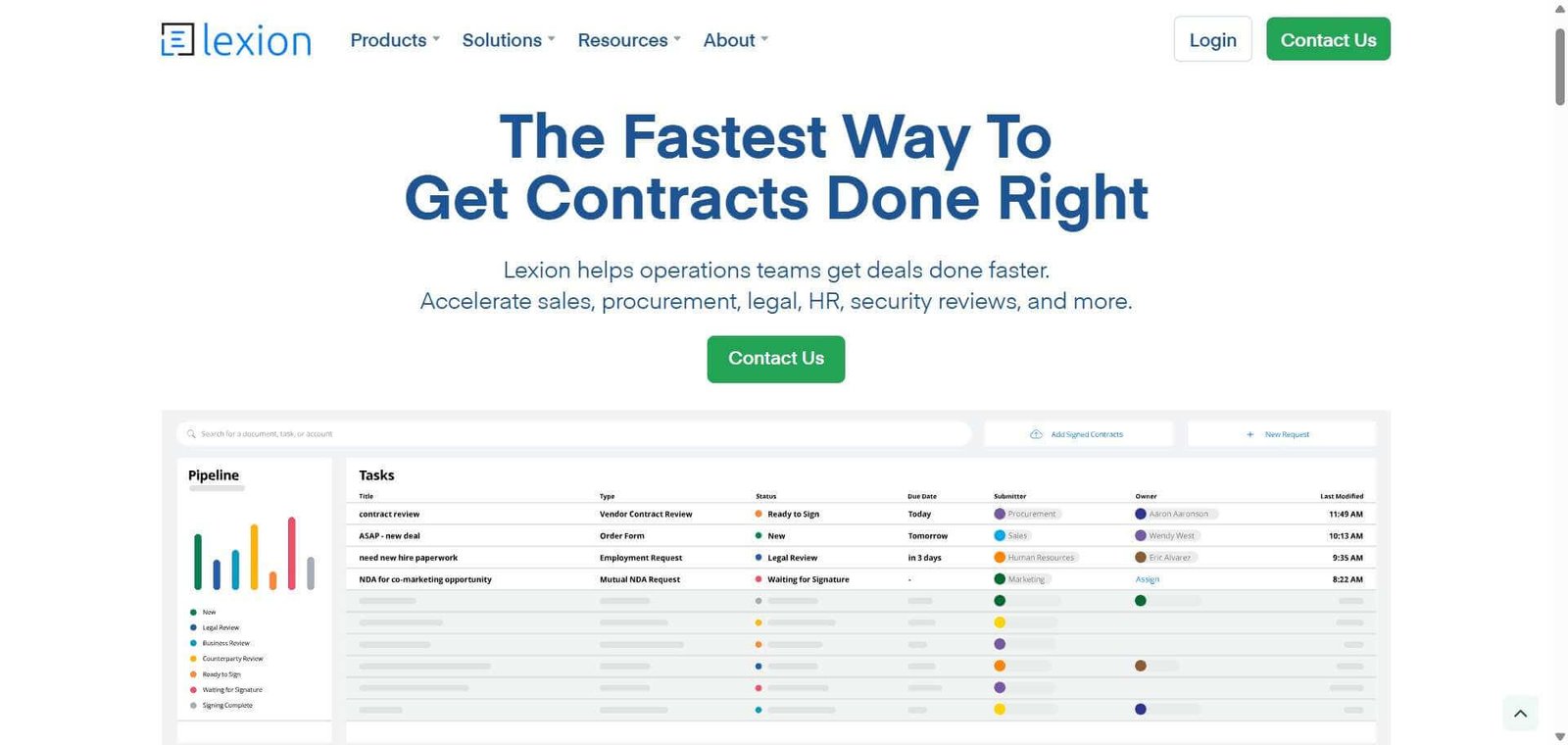
- Lexion — Better for mid-market organisations wanting AI contract intelligence with faster implementation at lower entry cost
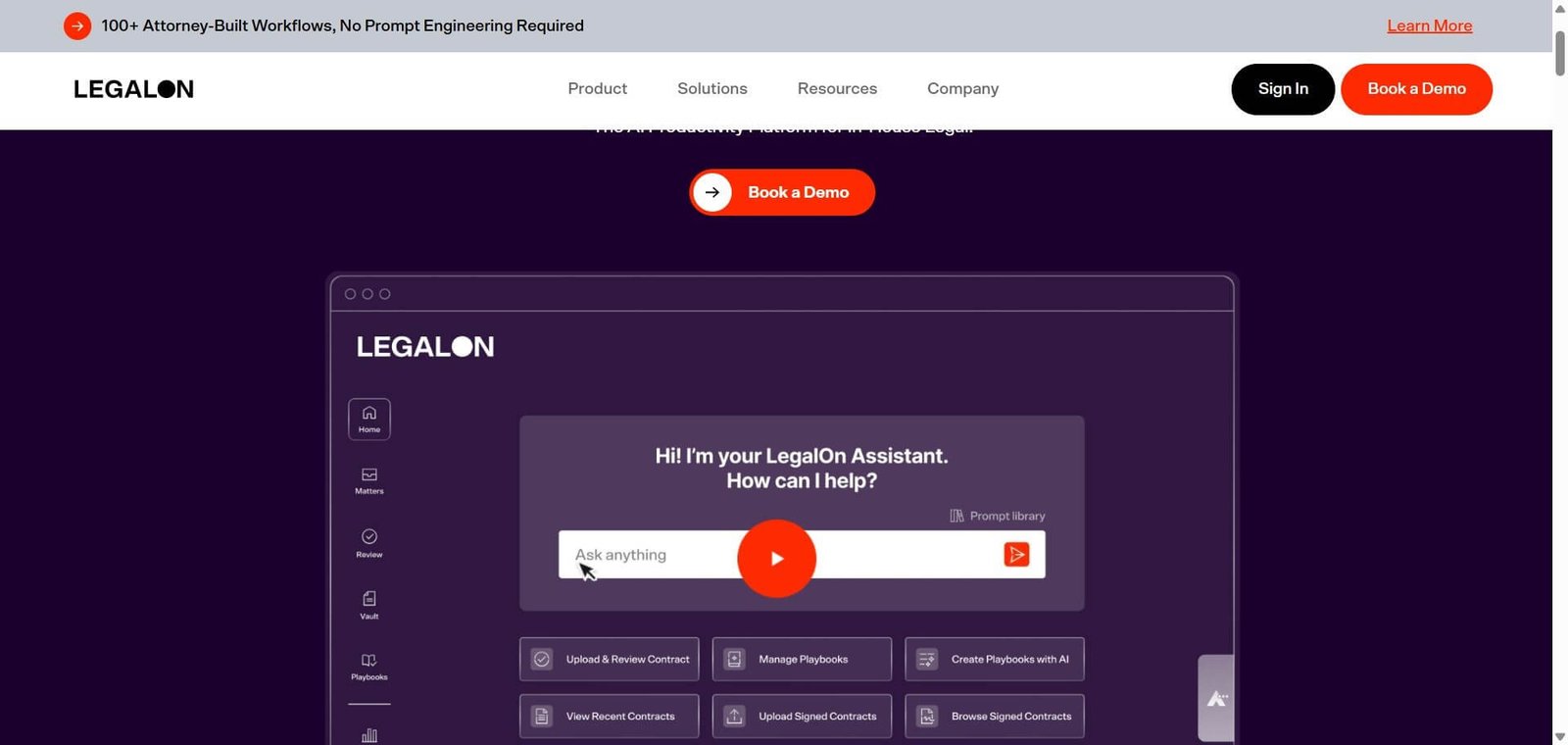
- LegalOn — Better for AI contract review accuracy with published 2026 benchmark results and accessible mid-market pricing
- Juro — Better for mid-market and startup legal teams wanting AI-native CLM at accessible pricing without enterprise implementation complexity
Frequently Asked Questions (FAQ)
Leah is the January 2026 rebrand of ContractPodAi — an enterprise AI contract lifecycle management and agentic automation platform covering intake, AI review, drafting, repository, workflow, and obligation tracking, rated 4.6/5 on G2 and 4.7/5 on Gartner Peer Insights. Enterprise pricing from approximately $50,000/year. Official website: leahai.com.
ContractPodAi rebranded as Leah on January 5, 2026 — the name stands for Lead, Empower, Accelerate, and Harmonize — signalling a strategic expansion beyond contract lifecycle management into broader agentic AI automation across legal, procurement, and finance.
Leah pricing is custom-quoted. Standard tier entry is approximately $50,000/year. Professional tier runs $100,000 to $200,000/year. Enterprise with the full Agentic OS suite and custom-trained AI models reaches $200,000 to $500,000 plus annually. First-year total cost including implementation is typically significantly higher than the subscription alone.
Yes — Microsoft 365 native integration is one of Leah’s most consistently cited differentiators among enterprise users, allowing legal and business teams to access CLM capabilities within familiar Microsoft tools rather than switching to a new interface.
Leah is the stronger choice for organisations with deep Microsoft 365 footprints and those moving toward agentic AI contract automation. Ironclad has the highest contract workflow throughput capability and the deepest sales workflow integration for revenue teams. Both are enterprise-only CLM platforms at comparable pricing — evaluate both through parallel pilots for any enterprise CLM decision.
Leah supports multi-jurisdictional and multi-language contract workflows — routing contracts to the appropriate playbook, clause library, and approval chain based on jurisdiction, contract type, and governing law. Enterprise deployments covering operations across 40 plus countries use Leah to apply region-specific compliance controls and escalation rules from a single centralised platform without building separate workflows for each market.
Final Recommendation
Leah represents the most ambitious AI contract lifecycle management platform available for enterprises moving toward agentic legal and procurement automation — and the January 2026 rebrand from ContractPodAi reflects a genuine product evolution toward AI agents that handle end-to-end contract workflows rather than assistants that augment individual steps. For enterprise legal operations teams managing high contract volumes with deep Microsoft 365 requirements, Leah’s end-to-end scope and Agentic OS provide the most forward-looking CLM infrastructure available. The validation from 170 plus Gartner Peer Insights ratings confirms that the underlying platform delivers for enterprise legal teams who invest the time in proper implementation.
Next steps