Elicit Review: AI Research Tool Built for Systematic Literature Reviews
A systematic literature review that would take a researcher weeks to complete manually — searching databases, screening papers, extracting data from methods sections, and synthesising findings — takes hours with Elicit. It automates the most time-consuming parts of the process: finding relevant papers, reading and extracting specific data points from each one, and organising findings into a structured table for analysis. For academic researchers, clinicians conducting evidence reviews, and analysts surveying scientific literature, it is the most practically useful AI research tool available.
Quick Summary
Elicit is an AI research assistant specialising in literature review automation, paper data extraction, and findings synthesis, designed to dramatically reduce the time required for systematic and scoping reviews of scientific research.
Is it worth using? Yes for researchers, academics, and evidence-based practitioners who conduct regular literature reviews and want to reduce the manual work involved significantly. Who should use it? Academic researchers, systematic review teams, clinicians, policy analysts, and evidence-based practitioners in any field that relies on scientific literature. Who should avoid it? Users who need general web search or AI chat rather than specialised scientific literature review tools.
Verdict Summary
Best for
Academic researchers automating systematic and scoping literature reviews
Clinicians and healthcare teams conducting evidence reviews of clinical research
Policy analysts surveying scientific evidence for evidence-based recommendations
Not for
General web research unrelated to academic or scientific literature
Students looking for a simple paper search tool without systematic review needs
Teams needing real-time news or non-academic content
Rating ⭐⭐⭐⭐½ 4.6 / 5
What Is Elicit?
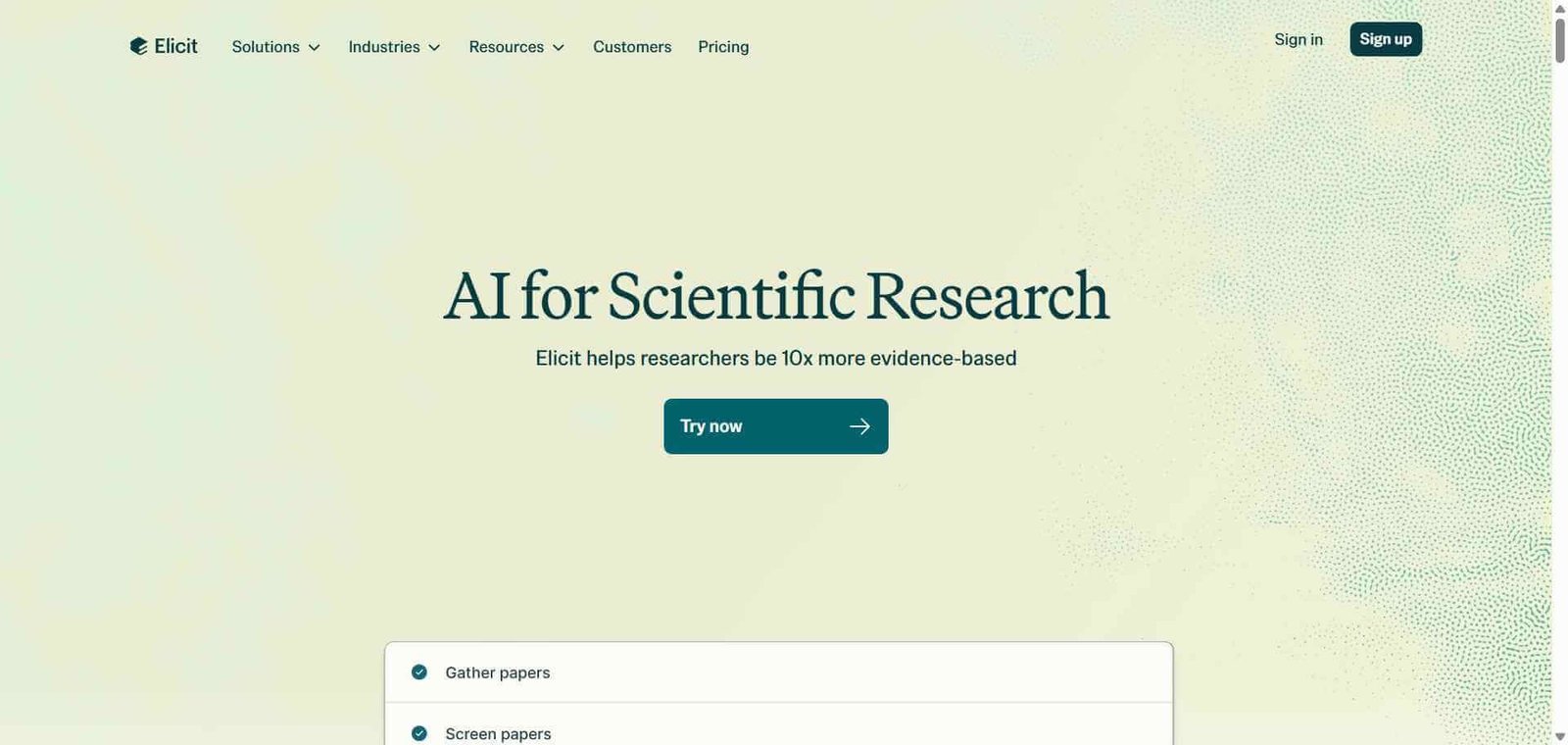
Elicit is an AI research tool built specifically for the literature review workflow. Unlike general research AI tools that search broadly across the web, Elicit focuses on peer-reviewed scientific literature and is specifically designed to support systematic review methodology. Its core capability is automating the data extraction phase of literature review: given a set of research papers, Elicit can read each one and extract specific data points you specify — sample size, methodology, effect size, population characteristics, key findings — into a structured table without manual reading.
This extraction capability is what makes Elicit distinctively valuable for systematic reviewers. The hours spent reading abstracts and full papers to extract structured data can be reduced to minutes, allowing reviewers to focus analytical attention on interpretation rather than data collection.
How Elicit Works
Enter your research question. Type your research question and Elicit searches its index of scientific literature to identify relevant papers.
Screen and filter results. Review the returned papers and apply filters by publication date, study type, population, or other criteria to narrow the set to those relevant to your review.
Set up data extraction columns. Define the specific data points you want to extract from each paper — methodology, sample size, outcome measures, key findings, limitations — and Elicit reads each paper and extracts this information automatically.
Review the extraction table. Examine the extracted data in a structured table format, verify accuracy, and add notes or corrections where needed.
Synthesise findings. Use Elicit’s AI synthesis features to identify patterns, consensus findings, and contradictions across the extracted data.
Export your results. Download the structured data table and citations in formats compatible with reference managers and systematic review tools.
Key Features
Automated data extraction from research papers into structured tables
Search across a large index of peer-reviewed scientific literature
Customisable extraction columns for any data point type
AI synthesis identifying patterns and consensus across multiple papers
Abstract and full-text screening assistance for inclusion and exclusion decisions
PDF upload for extracting data from papers not in the Elicit index
Export in CSV and citation formats for downstream analysis
PICO framework support for clinical and health research reviews
Real-World Use Cases
Systematic literature review: Automate the screening and data extraction phases of a formal systematic review, reducing a multi-week manual process to a fraction of the time.
Clinical evidence synthesis: Review the evidence base for a clinical intervention by extracting effect sizes, population characteristics, and methodological quality indicators from relevant trials.
Policy evidence review: Survey the scientific literature on a policy-relevant topic to synthesise findings and identify the strength and consistency of evidence for specific recommendations.
Research gap identification: Map the existing literature on a topic to identify what has been studied, what methodologies have been used, and where research gaps exist for future work.
Automated data extraction saves enormous reviewer time
Extraction accuracy requires human verification on critical data
Specifically designed for systematic review methodology
Less useful for general research outside scientific literature
PICO framework support aids clinical research workflows
Full-text access depends on paper availability and journal paywalls
PDF upload extends coverage beyond the built-in index
Advanced features require paid plan
Export formats compatible with systematic review tools
Smaller paper index than PubMed or Semantic Scholar alone
Pricing & Plans
Free — $0/month
Limited searches per month
Basic data extraction
Standard paper access
Export in basic formats
Plus — $12/month
500 papers per month
Full data extraction features
PDF upload for papers outside the index
Advanced synthesis features
Priority support
Organisation — Custom pricing
Team access with shared workspaces
Higher volume limits
Dedicated support
Custom integrations
Best Alternatives & Comparisons
Consensus AI — Better for quick question-based evidence checks with a consensus meter, less systematic extraction capability
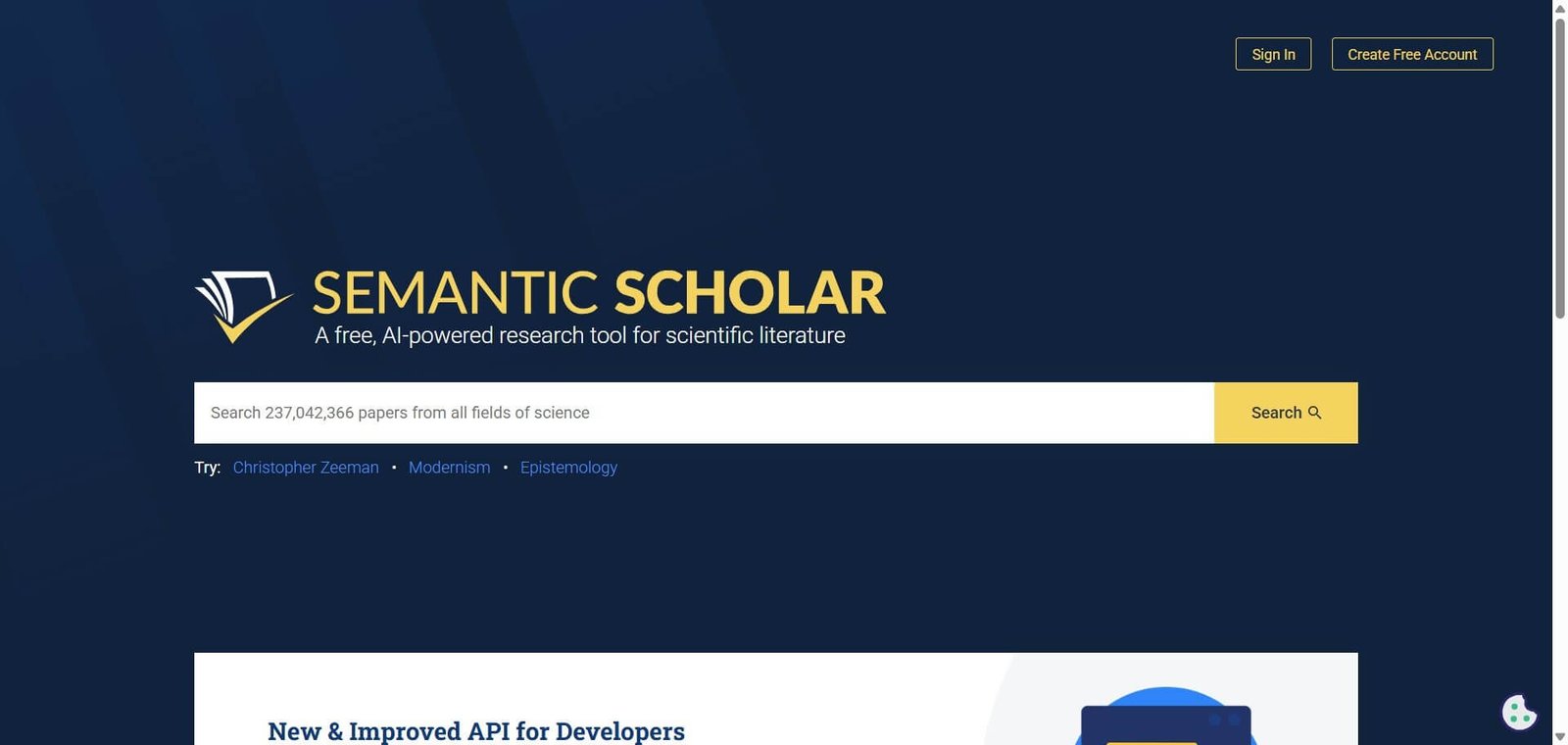
NotebookLM — Better for analysing specific documents you have already gathered, not for searching across literature
Perplexity AI — Better for general cited web research, less suited to systematic scientific literature review
Scite AI — Similar research focus with citation analysis features, different workflow emphasis
Frequently Asked Questions (FAQ)
What is Elicit?
Elicit is an AI research assistant that automates literature review tasks including paper discovery, screening, and structured data extraction, designed specifically for systematic and scoping reviews of scientific research.
Is Elicit free?
Yes, Elicit offers a free plan with limited monthly searches and basic extraction. The Plus plan at $12/month provides 500 papers per month and full extraction features.
How does Elicit extract data from research papers?
Elicit reads the full text of research papers and extracts the specific data points you define in your extraction columns — such as methodology, sample size, effect size, and key findings — using AI to locate and pull the relevant information into a structured table.
Does Elicit support PICO framework searches?
Yes, Elicit supports PICO (Population, Intervention, Comparison, Outcome) structured searching, which is the standard framework for systematic reviews in clinical and health research.
How accurate is Elicit's data extraction?
Elicit’s extraction is accurate on well-structured research papers but requires human verification, particularly for critical numerical data. It is best used to accelerate the extraction process rather than replace expert review entirely.
How does Elicit compare to Consensus AI?
Elicit is designed for systematic literature review with structured data extraction across multiple papers. Consensus AI is designed for quick evidence checks on specific questions with a consensus signal. Elicit is the stronger tool for formal research reviews; Consensus AI is faster for point-in-time evidence questions.
Final Recommendation
Elicit is the most valuable AI tool available for researchers who conduct systematic literature reviews. The automated data extraction capability alone justifies the Plus plan for any researcher conducting more than one or two reviews per year. The hours saved on screening and extraction translate directly into more time for the analytical work that actually requires human expertise. Start with the free plan to test extraction quality on papers relevant to your research area.