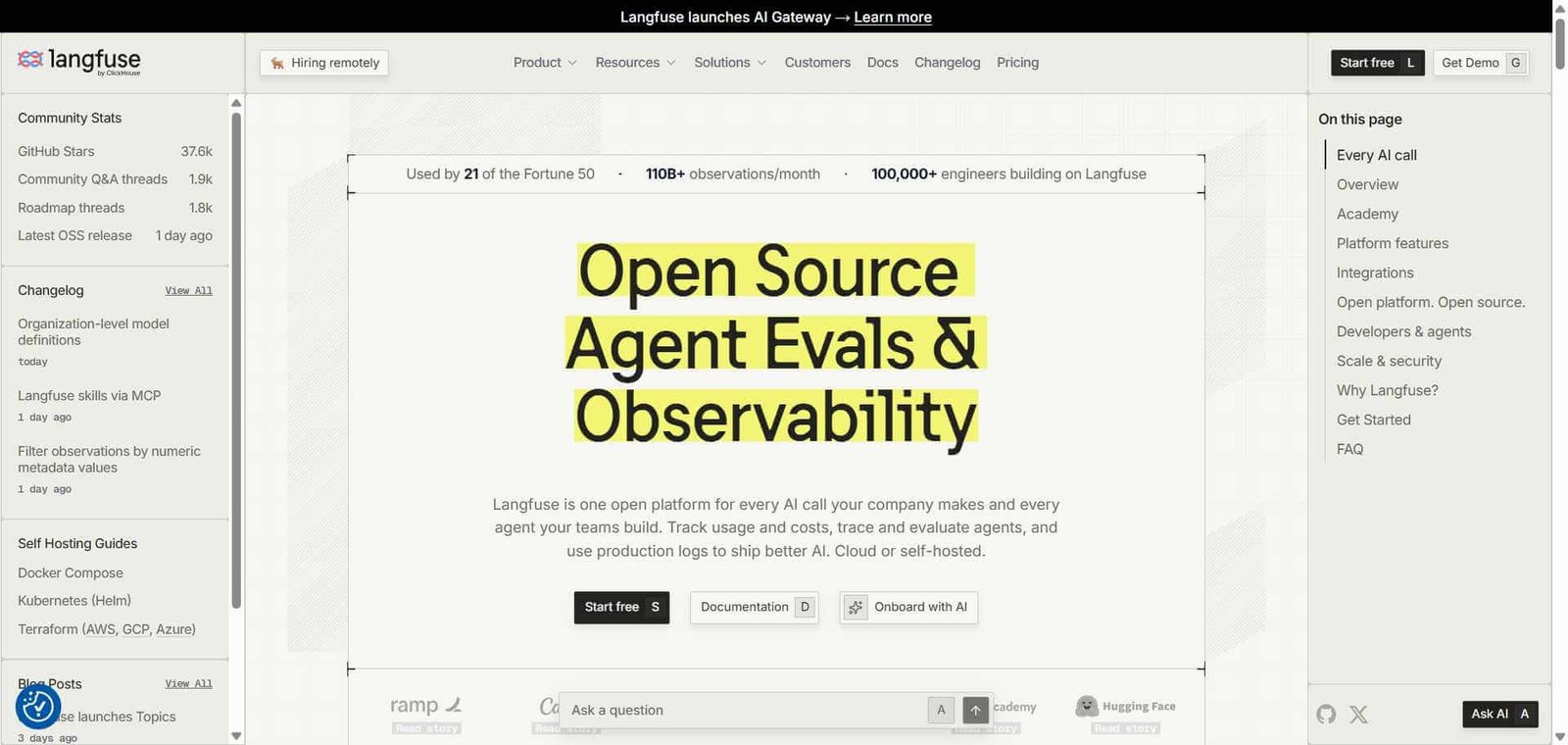

Langfuse
Langfuse is an open-source LLM observability platform for tracing AI workflows, monitoring model costs, managing prompts, and evaluating AI applications.
Langfuse Review: Features, Pricing, Use Cases and Alternatives
Deepgram Review: Quick Verdict
Langfuse is an open-source LLM observability platform that helps developers trace AI application workflows, monitor model usage and costs, manage prompts, and evaluate AI-generated responses. It supports cloud deployment and self-hosting, making it suitable for developers building AI agents, RAG applications, chatbots, and production LLM systems.
Unlike conventional application monitoring tools, Langfuse captures information specific to AI workflows, including prompts, model generations, tool calls, retrieval operations, and evaluation results. Its free cloud plan makes it accessible to developers experimenting with LLM applications, while paid plans offer higher usage limits and longer data access.
The platform is worth considering if you need visibility into how your AI application works beyond its final response. However, it requires technical implementation and is not intended for non-technical users looking for a ready-made AI application.
Langfuse Review
An AI chatbot can return an incorrect answer for several reasons. It might retrieve the wrong document, send an incomplete prompt to the model, select an unsuitable model, or fail during an external tool call.
Without detailed execution logs, identifying the source of the problem can take considerable time.
Langfuse addresses this challenge by providing observability and evaluation capabilities for LLM-powered applications. Developers can inspect individual model calls, follow multi-step agent executions, monitor token consumption, and compare different prompt versions.
The platform also includes datasets, experiments, human annotations, and an AI Gateway. These capabilities make it relevant to teams moving from AI prototypes to production applications.
This review examines its features, pricing, integrations, limitations, and alternatives, with a focus on practical engineering requirements rather than vendor claims.
Verdict Summary
Best for: AI developers, startups, and engineering teams building LLM applications, RAG systems, and AI agents.
Not for: Non-technical users seeking ready-made AI assistants or teams needing only traditional application monitoring.
Pricing: Free Hobby plan available; paid cloud plans start at $29/month.
Editorial rating: 4.5/5
User rating: 5.0/5 on Product Hunt (49 reviews).
Langfuse is a strong option for developers who need to understand what happens inside their AI applications, not just examine the final model response. Its combination of LLM tracing, prompt versioning, cost monitoring, and evaluation datasets makes it useful for debugging applications and maintaining response quality as projects grow.
Its open-source core, OpenTelemetry support, and self-hosting options are particularly appealing to teams that want flexibility over their development infrastructure. However, implementation requires programming knowledge, and self-hosted deployments introduce additional infrastructure and maintenance responsibilities.
Our verdict: Langfuse is worth considering for production-oriented AI development, particularly when observability and evaluation are both important. Smaller teams can start with the free plan, while developers with specialized evaluation requirements should compare Braintrust and Arize Phoenix before committing.
What Is Langfuse?
Langfuse is an LLM engineering and observability platform designed to help developers understand, monitor, and improve applications powered by large language models.
Consider a customer-support chatbot built using an LLM, a vector database, and an external order-management API.
When a customer asks about a delayed delivery, the application might:
Receive the customer’s question.
Search a knowledge base or order database.
Retrieve relevant information.
Send a prompt and retrieved context to an LLM.
Generate a response.
Return the answer to the customer.
If the chatbot provides incorrect information, developers need to investigate each operation rather than simply examining the final response.
Langfuse records these operations as traces and observations, allowing developers to inspect the execution history.
Depending on the instrumentation and configuration, teams can examine:
Input prompts and model responses.
Model names and generations.
Tool calls and retrieval operations.
Token consumption and associated costs.
Execution time and latency.
User feedback and evaluation scores.
Custom metadata and session information.
How is Langfuse different from traditional monitoring software?
Traditional application monitoring platforms primarily focus on infrastructure, server performance, errors, and application requests.
Langfuse adds information relevant to LLM applications. Developers can inspect prompt inputs, generated outputs, retrieval steps, model interactions, and agent execution paths.
It also includes development capabilities such as prompt management, evaluation datasets, experiments, and human annotation.
Another consideration is deployment flexibility. Developers can use Langfuse Cloud or self-host the platform. Its core repository is MIT-licensed, although designated enterprise directories have separate licensing terms. Businesses should review the repository’s licensing information before making commercial deployment decisions.
In January 2026, ClickHouse acquired Langfuse. ClickHouse stated that it would continue supporting the open-source project and self-hosting while investing in the platform’s development.
How Langfuse Works
Langfuse collects information from an instrumented AI application and organizes it into traces, observations, and associated metrics.
A simplified architecture looks like this:
User request → AI application → Model and external tools → Langfuse instrumentation → Trace collection → Evaluation and monitoring
Here is how the components fit together.
1. User request and application
A user submits a question to an AI chatbot or application. The application processes the request using its orchestration framework.
2. Model and external services
The application sends information to an LLM provider and may interact with a vector database, APIs, or external tools.
3. Langfuse instrumentation
The developer integrates Langfuse through its SDKs, OpenTelemetry exporters, or supported integrations. These capture relevant application operations.
4. Trace collection
Langfuse organizes related operations into traces and observations. Developers can follow an interaction and examine individual execution steps.
5. Monitoring and evaluation
Teams use dashboards, cost information, latency metrics, evaluation scores, and annotations to investigate application performance.
6. Development improvements
Developers can modify prompts, compare model configurations, build datasets, and run experiments before deploying changes.
Langfuse does not automatically correct inaccurate AI responses. It provides the visibility and evaluation workflows needed to identify problems and improve application behaviour.
Key Features
1. LLM and AI Agent Tracing
Langfuse captures individual operations within AI applications, including model calls, tool executions, and retrieval activities.
For a multi-agent application, this makes it easier to identify which operation caused an unexpected response or failure.
2. Token and Cost Tracking
The platform provides information about model usage, token consumption, and associated costs.
Developers can investigate which models or workflows contribute most to application expenses. Comparing prompt versions can also help identify whether a change increases token consumption.
For applications with multiple agents, cost attribution becomes particularly important because one user request can trigger several model calls.
3. Prompt Management and Versioning
Langfuse allows teams to manage prompts separately from application code.
Developers can maintain different versions, test modifications, deploy selected versions, and roll back when necessary.
This becomes useful when a chatbot’s behaviour changes after a prompt update. Instead of manually searching through code revisions, teams can inspect the relevant prompt versions.
4. LLM Evaluation
Langfuse supports several evaluation approaches:
LLM-as-a-judge evaluators.
Custom evaluation functions.
Heuristic-based evaluation.
Human annotations.
For example, a support chatbot can be evaluated for answer relevance, factual accuracy, and whether it follows a predefined response format.
Automated evaluation scores should not be treated as proof of correctness. They need suitable test cases and, where accuracy matters, human verification.
5. Datasets and Experiments
Developers can create datasets containing representative inputs and use them to compare different prompts, models, or application configurations.
A RAG application might use a collection of questions with expected answers to evaluate changes in retrieval and response quality.
This helps teams identify regressions before releasing updated versions.
6. AI Gateway
Langfuse AI Gateway provides a routing layer for supported model requests, including OpenAI and Anthropic.
Developers can route model calls through the gateway and automatically capture relevant usage and tracing information.
The gateway can help teams centralize model access and monitor spending. However, its documented beta status should be considered when evaluating production requirements.
7. OpenTelemetry and Framework Integrations
Langfuse supports Python and TypeScript SDKs and OpenTelemetry-based instrumentation.
Its integrations include LangChain, Vercel AI SDK, Pydantic AI, CrewAI, Google ADK, LiveKit, and other development frameworks.
This means teams can incorporate observability into existing applications without necessarily rebuilding their architecture around one specific framework.
Practical Example: Monitoring a Customer-Support RAG Chatbot
A useful way to understand Langfuse is to consider a customer-support chatbot that answers questions using company policy documents.
Suppose a customer asks:
“Can I return a product after 20 days?”
The chatbot searches the company’s return policy, retrieves relevant documents, and sends the information to an LLM.
The model generates an answer, but the response incorrectly states that returns are accepted after 20 days.
A developer investigating this issue could use Langfuse to examine several parts of the workflow.
Check the retrieval operation
Did the application retrieve the correct return policy? Was the retrieved information outdated or incomplete?
Inspect the prompt
Did the prompt include the relevant policy text? Was the model instructed to answer only from the supplied information?
Examine the model response
Did the model misinterpret the retrieved information or introduce unsupported details?
Review token usage and latency
Did the application send unnecessary context or make additional model calls?
Evaluate the response
Could a test dataset containing return-policy questions identify similar incorrect answers in other cases?
This example illustrates how tracing and evaluation can support debugging. It is an illustrative workflow, not a claim that this particular chatbot was tested in a live Langfuse account.
Real-World Use Cases
For AI startup founders
Startups building AI SaaS products can monitor model consumption, latency, and application activity. This information helps identify expensive features and unexpected increases in model usage.
For developers building AI agents
Developers working with CrewAI, LangChain, or custom agents can investigate tool calls, individual model interactions, and execution sequences.
For RAG application developers
Teams building retrieval-augmented generation systems can inspect retrieved context and model responses to investigate whether incorrect answers originate from retrieval or generation.
For AI product and QA teams
Evaluation datasets can help teams compare application behaviour after changing prompts or models. Human annotations provide an additional review layer when automated evaluation is insufficient.
For enterprise engineering teams
Organizations operating multiple AI applications can use a common observability platform to investigate traces, monitor costs, and evaluate application behaviour. Self-hosting and supported data-region options can also be relevant to infrastructure and governance requirements.
For coding-agent developers
Teams developing coding assistants and autonomous agents can investigate model calls and tool executions to understand unexpected behaviour and resource consumption.
Pros and Cons
| Pros | Cons |
|---|---|
| Open-source core with self-hosting options | Requires technical implementation |
| Detailed LLM and agent tracing | Complex workflows can generate large volumes of trace data |
| Prompt management and versioning | Requires understanding of prompt deployment workflows |
| Token, cost, and latency monitoring | Cloud usage and retention limits need attention |
| Broad integrations and OpenTelemetry support | Advanced enterprise controls require paid plans |
| Evaluation datasets and experiments | Automated evaluations require careful validation |
The biggest advantage is the combination of observability and development workflows. Teams can investigate model behaviour and use the resulting information to improve prompts and application configurations.
However, implementation and operational requirements should not be underestimated. Self-hosting requires infrastructure management, while cloud users need to understand data retention and usage limits.
Limitations of Langfuse
Langfuse covers several important aspects of LLM development, but there are technical considerations worth examining before adoption.
1. Instrumentation requires development work
Langfuse is not a monitoring tool that automatically understands every application. Developers need to integrate SDKs, OpenTelemetry exporters, or supported integrations and configure the information they want to capture.
2. Self-hosting introduces maintenance responsibilities
A self-hosted deployment requires infrastructure, storage, updates, backups, and operational monitoring. Organizations should estimate these requirements before choosing self-hosting simply to avoid subscription fees.
3. Trace volume and data retention need planning
Applications generating large numbers of model calls can produce substantial observability data. Teams should monitor ingestion volume, retention requirements, storage costs, and the applicable plan limits.
4. Sensitive information requires careful handling
Prompts and model responses can contain personal information, customer records, business documents, or internal data.
Organizations should review what gets captured, configure appropriate masking and access controls, and verify data-region and retention requirements before sending production information to a hosted service.
5. LLM-as-a-judge is not a substitute for human review
Automated evaluators can help compare responses, but their scores may be inconsistent or unsuitable for certain tasks. Evaluation datasets should represent real application inputs, and high-impact decisions should have appropriate human oversight.
6. AI Gateway should be evaluated against production requirements
The gateway introduces another component into the model request path. Teams should verify provider support, routing behaviour, latency, reliability, and beta limitations before making it part of a critical production architecture.
Pricing & Plans
Langfuse offers cloud-hosted and self-hosted deployment options.
| Plan | Price | Included usage | Best suited for |
|---|---|---|---|
| Hobby | Free | 50,000 units/month | Personal projects and prototypes |
| Core | $29/month | 100,000 units/month | Production applications |
| Pro | $199/month | 100,000 units/month | Scaling engineering teams |
| Enterprise | $2,499/month | 100,000 units/month | Large organizations |
Hobby
No credit card required.
30 days of data access.
Two users.
Community support through GitHub.
Core
90 days of data access.
Unlimited users.
Additional usage starts at $8 per 100,000 units at the initial overage tier.
In-app support.
Pro
Three years of data access.
Data retention management.
Unlimited annotation queues.
Higher ingestion limits.
SOC 2 and ISO 27001 reports and HIPAA-ready region.
Enterprise
Audit logs and SCIM API.
Custom rate limits.
Uptime and support SLAs.
Named lead support engineer.
Enterprise support capabilities.
The optional Teams add-on costs $300/month and includes enterprise SSO, SSO enforcement, fine-grained RBAC, and dedicated support channels.
What about self-hosting?
The self-hosted option allows organizations to operate Langfuse using their own infrastructure. However, infrastructure, storage, maintenance, and operational expenses remain the organization’s responsibility.
Who should pay?
Individual developers can start with Hobby. Startups running production applications can consider Core when longer data access and unlimited users become necessary. Pro and Enterprise are more appropriate when retention, ingestion capacity, security, and support requirements justify the additional expense.
One pricing detail deserves attention: billable units are not equivalent to individual user requests. Actual observation and evaluation activity affects consumption.
Best Alternatives & Comparisons
Choosing an LLM observability platform depends on your existing development stack, deployment requirements, evaluation needs, and infrastructure.
| Platform | Consider it when | Main distinction |
|---|---|---|
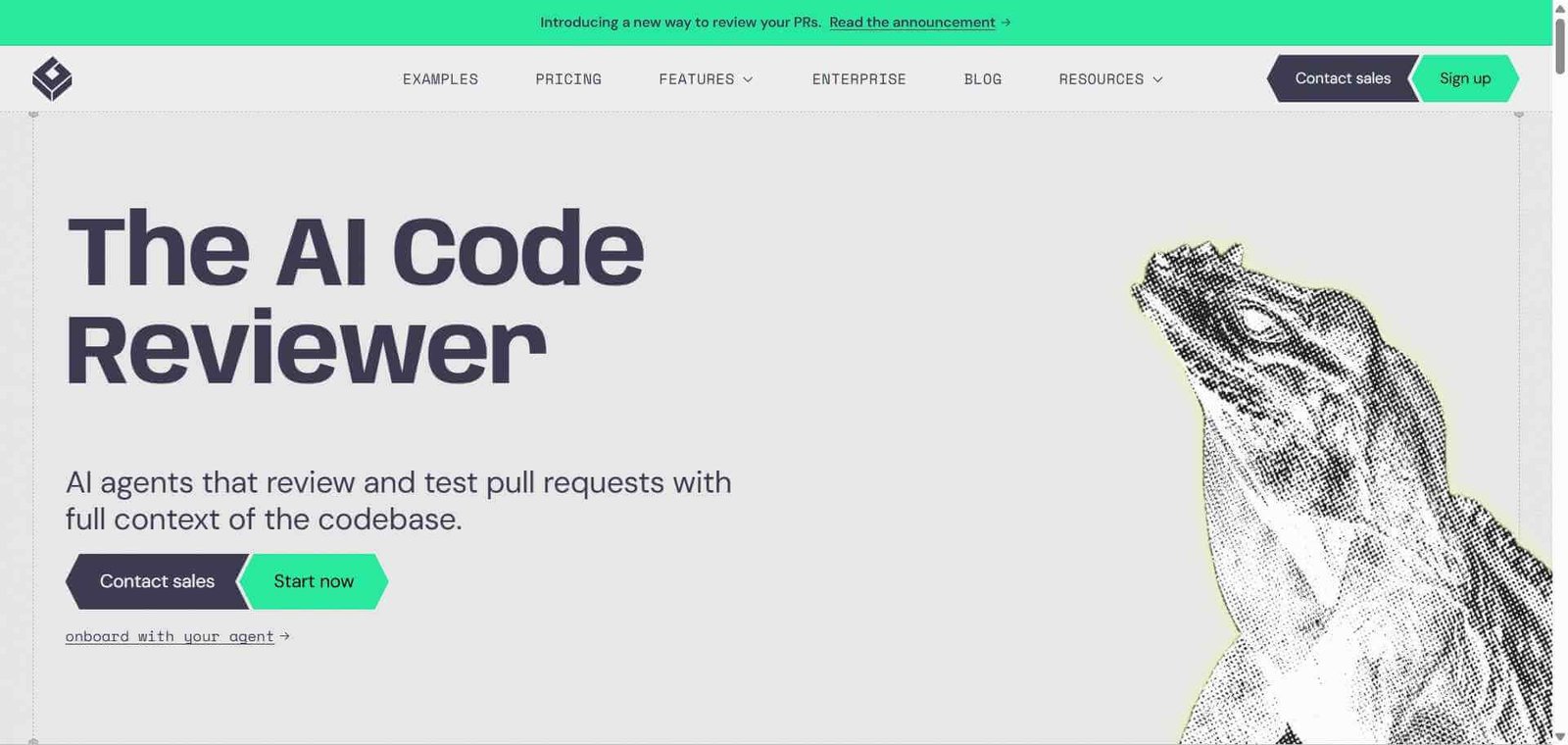
LangSmith by LangChain | AI engineering teams building, testing, and operating LLM applications and AI agents | Framework-agnostic tracing, offline and online evaluations, human feedback, production monitoring, and agent deployment |
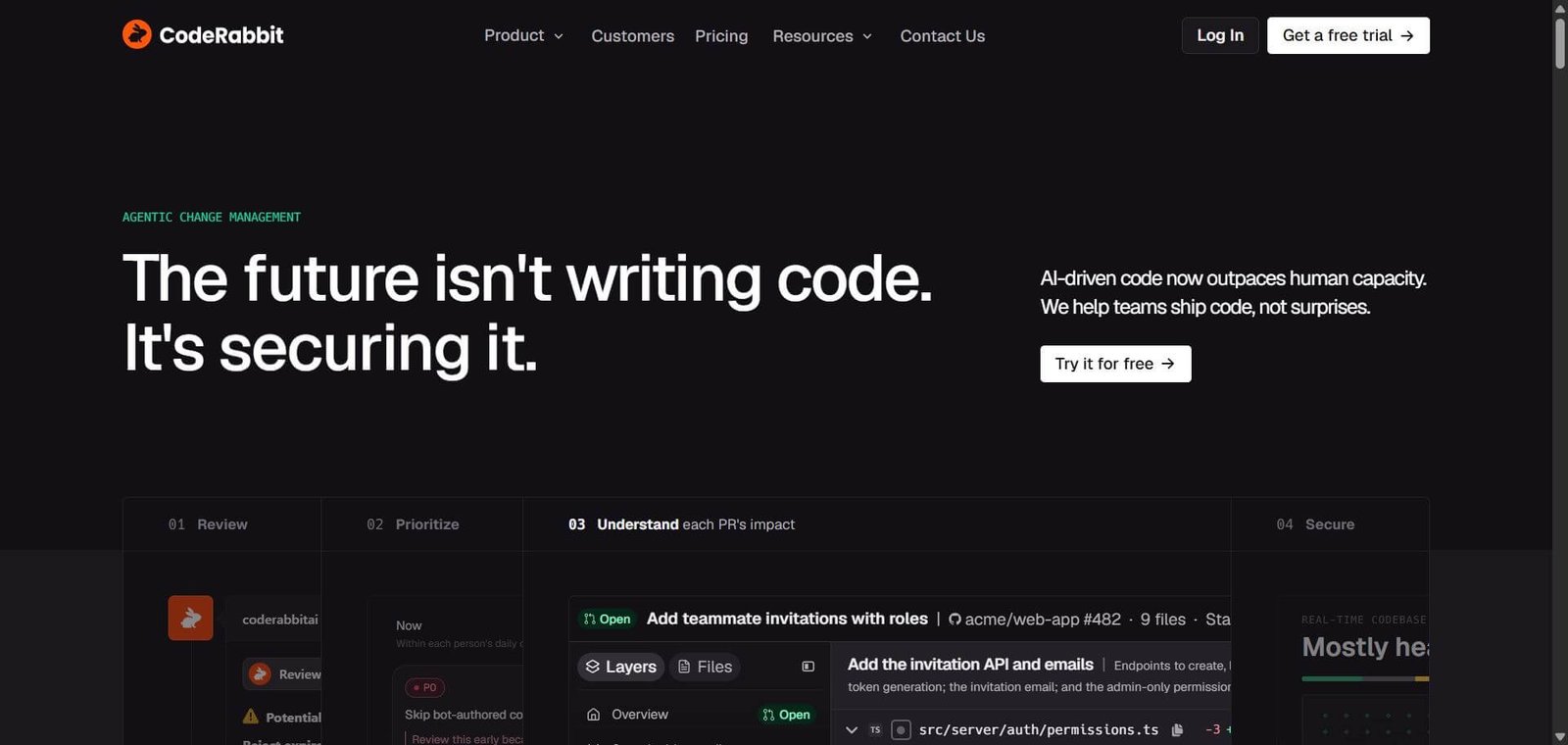
| Braintrust | Evaluation and experimentation are central requirements | Evaluation-focused development workflows |
| Arize Phoenix | You want open-source observability and evaluation | Open-source LLM tracing and evaluation |
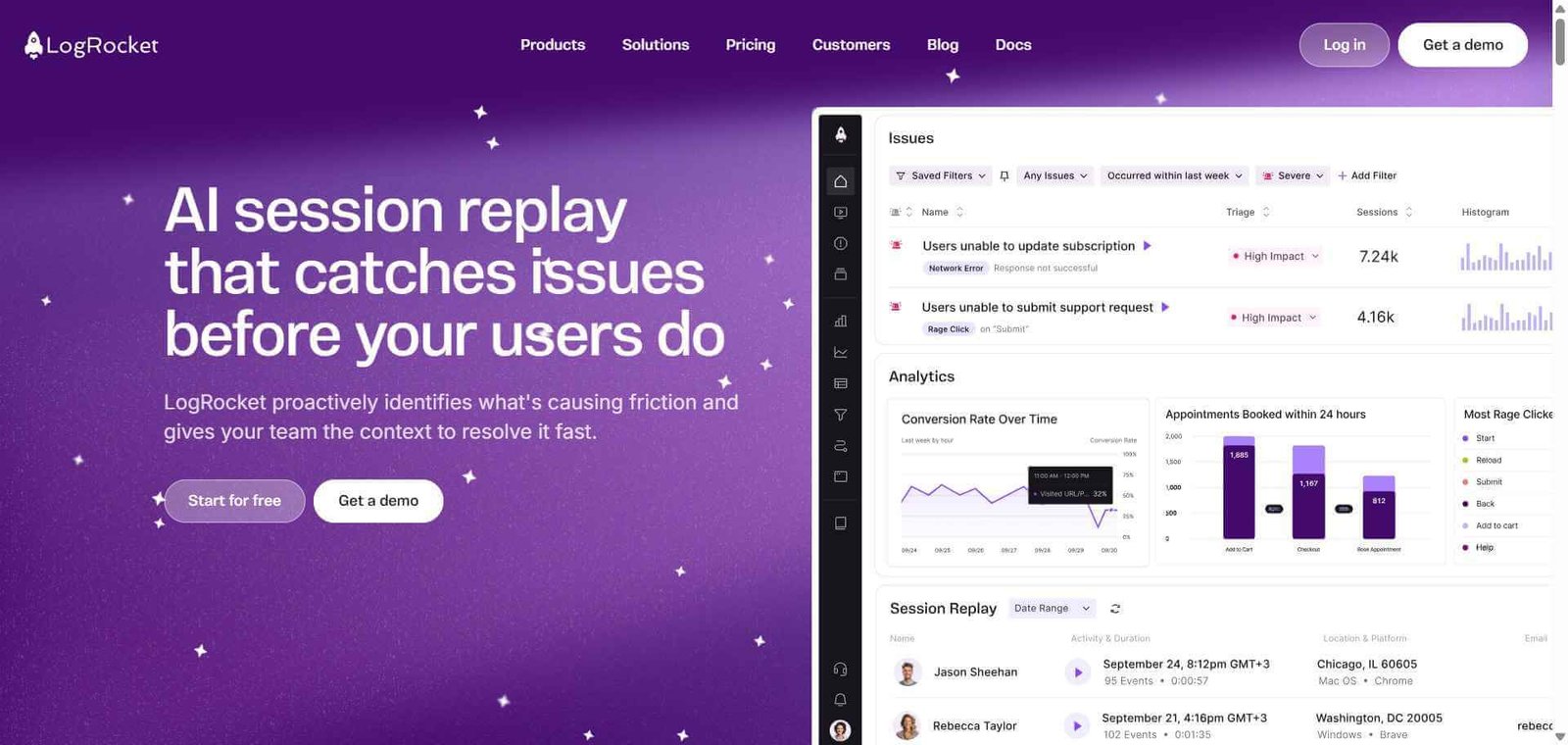
| Datadog | You already use enterprise application monitoring | Broader infrastructure and application observability |
| Comet Opik | You want another open-source LLM monitoring option | Tracing, evaluation, and optimization workflows |
Langfuse vs LangSmith
LangSmith is an agent engineering platform from LangChain. Although it integrates closely with LangChain and LangGraph, it is not limited to those frameworks. Developers can also use it with other frameworks, models, and custom-built applications.
Its capabilities extend beyond tracing and monitoring. LangSmith combines observability, evaluation, human feedback, and deployment features to help teams inspect agent behaviour, test changes, identify production issues, and improve application quality over time.
Langfuse and LangSmith serve overlapping needs but have different strengths. Langfuse stands out for its open-source foundation, self-hosting flexibility, and LLM observability workflows. LangSmith offers a broader agent development lifecycle, connecting tracing and evaluations with deployment and production improvement workflows.
Langfuse vs Braintrust
Braintrust deserves consideration when evaluation experiments and systematic testing are the main requirements. Langfuse offers a broader combination of open-source observability, prompt management, and self-hosting.
Langfuse vs Arize Phoenix
Both are relevant to developers looking for LLM tracing and evaluation. Phoenix is worth investigating if its observability and evaluation workflows better match your requirements. Check the licensing differences: Phoenix uses Elastic License 2.0, while Langfuse’s core repository is MIT-licensed subject to designated enterprise exceptions.
Langfuse vs Datadog
Datadog is a more natural choice when AI monitoring needs to fit into an existing infrastructure and application performance monitoring environment. Langfuse is more specifically focused on LLM application development.
Langfuse vs Comet Opik
Comet Opik is another option for teams that want open-source tracing and evaluation capabilities. Compare framework support, deployment requirements, pricing, and evaluation workflows using your own application before deciding.
These platforms are not interchangeable in every situation. A short evaluation using representative application traces and datasets will provide a more useful comparison than feature counts alone.
Who Should Use Langfuse?
Individual developers
Developers experimenting with LLM applications can use the free plan to understand model interactions, test instrumentation, and learn how tracing works.
AI startups
Startups operating chatbots, AI assistants, and agent-based products can use Langfuse to investigate application issues and monitor model costs as usage grows.
Enterprise engineering teams
Larger organizations can consider its cloud and self-hosted deployment options when they need centralized observability, evaluation workflows, and administrative controls.
Who should consider alternatives?
Non-technical users who need ready-made AI applications.
Teams looking exclusively for conventional infrastructure monitoring.
Organizations requiring specialized evaluation capabilities that another platform handles more effectively.
Developers who do not need detailed LLM tracing or prompt management.
Frequently Asked Questions (FAQ)
Langfuse’s core repository is MIT-licensed, but designated enterprise directories have separate licensing terms. Businesses should review the repository and licensing documentation before commercial deployment.
Yes. Langfuse supports OpenTelemetry-based instrumentation alongside its Python and TypeScript SDKs, allowing developers to integrate observability into supported application stacks.
Yes. Langfuse can capture agent workflows, model calls, tool invocations, and related execution steps when the application is appropriately instrumented.
Yes. Langfuse offers cloud and self-hosted deployment options and includes tracing, monitoring, and evaluation capabilities. Production suitability still depends on implementation, data governance, retention, reliability, and infrastructure requirements.
Langfuse supports tracing retrieval operations and evaluating application outputs through datasets, evaluators, and annotations. Developers can use these capabilities to investigate retrieval and generation quality.
Yes. Langfuse provides Docker Compose deployment guidance, along with Kubernetes and infrastructure deployment options. Self-hosting requires technical knowledge and ongoing maintenance.
Langfuse tracks model usage and associated costs using available model pricing information and recorded usage data. Cloud billing also uses its defined billable-unit model, so teams should distinguish application-level model costs from Langfuse subscription and usage charges.
Final Recommendation
Langfuse is a suitable option for developers and engineering teams building AI agents, RAG applications, and production LLM products that need more visibility into model behaviour.
Its combination of tracing, prompt management, cost monitoring, datasets, and evaluations addresses several challenges that emerge when AI applications move beyond prototypes.
The free plan makes initial evaluation straightforward, while self-hosting provides an alternative for organizations that want to manage their own infrastructure. However, teams should account for implementation effort, trace data management, privacy requirements, and the limitations of automated evaluation.
If your application depends heavily on LangChain, compare LangSmith. If evaluation is your primary requirement, investigate Braintrust as well.
Our recommendation: Start with one representative AI workflow, examine how Langfuse captures its traces, and test its evaluation capabilities before adopting it across your application stack.
Visit the official website to explore the documentation, pricing, and available deployment options: https://langfuse.com/