Botpress Review: The Open Source AI Chatbot Platform That Developers Actually Choose
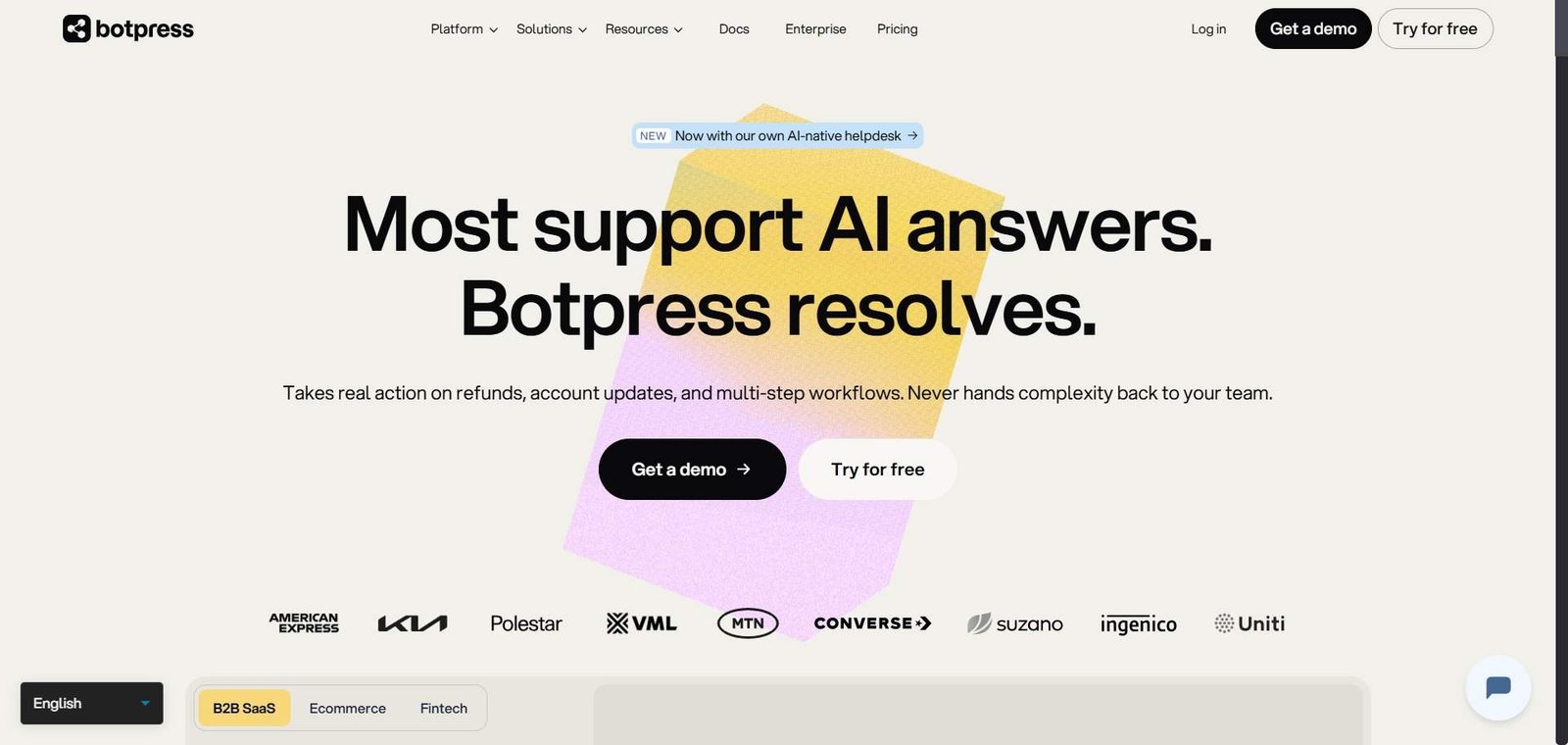
Most chatbot platforms are closed ecosystems — you build on their infrastructure, accept their limitations, and cannot self-host when data sovereignty becomes a requirement. Botpress is the open-source alternative that provides a complete AI chatbot and virtual agent building platform with LLM-native architecture — meaning the AI is embedded throughout the conversation logic rather than bolted on as an afterthought — while remaining fully open-source for teams that need to run it on their own infrastructure. With over 750,000 developers in its community, it is the most widely adopted open-source chatbot platform available.
Quick summary
Botpress is an open-source LLM-native AI chatbot and virtual agent builder with a visual flow builder, knowledge base integration, multi-channel deployment, and developer-extensible architecture — used by 750,000 plus developers for customer support, internal automation, and conversational AI applications.
Is it worth using? Yes for developers, enterprises, and agencies who want a powerful, developer-extensible AI chatbot platform with open-source flexibility and self-hosting capability. Who should use it? Developers, technical teams, and enterprises building production AI chatbot and virtual agent applications who want open-source extensibility, LLM-native architecture, and self-hosting capability. Who should avoid it? Non-technical teams who need a simple no-code chatbot setup without developer involvement, where Tidio or Crisp’s built-in chatbots are more appropriate.
Verdict Summary
Best for
Development teams building production AI chatbots for customer support, internal automation, and conversational AI applications who want open-source extensibility
Enterprises with data sovereignty requirements who need to self-host chatbot infrastructure rather than sending conversation data to third-party cloud platforms
Agencies building chatbot solutions for clients who want a platform they can deeply customise and deploy across multiple client projects
Not for
Non-technical teams who need chatbot setup without developer involvement
Teams who need the simplest possible live chat with basic chatbot features where Tidio covers the requirement
Organisations that need out-of-box enterprise support without technical configuration
Rating ⭐⭐⭐⭐ 4.4 / 5
What Is Botpress?
Botpress is an LLM-native open-source chatbot platform — meaning its architecture is built around large language models at the core rather than treating LLMs as a feature add-on to a rules-based system. Every conversation flows through Botpress’s LLM reasoning layer, with the developer defining the contexts, knowledge bases, and conversation flows that guide the LLM’s behaviour — combining the flexibility of LLM-powered conversation with the predictability of defined conversational structure.
The platform provides a visual flow builder for designing conversation paths, a knowledge base system for RAG-powered question answering, integrations for deploying to web, WhatsApp, Telegram, Slack, and other channels, and a developer-extensible code execution layer for adding custom logic to any step.
How Botpress Works
Create a new bot. Start a new Botpress project in the cloud or self-hosted environment — the visual studio opens immediately with the flow builder and configuration tools.
Build your conversation flows. Use the visual canvas to design conversation paths — nodes for user inputs, AI responses, conditions, integrations, and code execution.
Add your knowledge base. Upload documents, URLs, and structured data that your bot should know — Botpress uses RAG to retrieve relevant information for answering user questions accurately.
Configure LLM behaviour. Set your system prompt, define the bot’s persona, configure which LLM model to use (OpenAI, Anthropic, or others), and define the contexts in which the bot should follow structured flows versus free-form conversation.
Add custom logic. Insert code execution nodes at any point in the conversation for custom business logic — API calls, database queries, conditional routing based on external data.
Deploy to channels. Publish your bot to web widget, WhatsApp, Telegram, Slack, or any channel with a webhook — from one Botpress configuration.
Key Features
LLM-native architecture with GPT-4, Claude, and other model support
Visual conversation flow builder for designing structured conversation paths
Knowledge base with RAG for accurate natural language question answering
Code execution nodes for custom business logic and API integration
Multi-channel deployment — web, WhatsApp, Telegram, Slack, and custom webhooks
Open-source codebase for self-hosting on any infrastructure
750,000 plus developer community with plugins and integrations
Analytics for conversation performance and user journey analysis
Enterprise features including SSO, audit logs, and dedicated infrastructure
Real-World Use Cases
Customer support automation: An e-commerce company deploys a Botpress AI agent that handles tier-1 customer support — answering product questions from a knowledge base, checking order status via API, processing returns, and escalating complex issues to human agents.
Internal IT helpdesk: An enterprise deploys a self-hosted Botpress bot for internal IT support — answering common IT questions from internal documentation, creating support tickets in Jira automatically, and routing hardware requests to the facilities team.
Sales qualification: A B2B company deploys a Botpress bot that qualifies inbound website visitors through a conversation — collecting company size, use case, and budget information and creating qualified leads in Salesforce when criteria are met.
Multi-language support: A global company deploys one Botpress bot that handles support in 15 languages — using LLM translation capabilities to respond in the user’s language without building separate bots for each market.
Multi-channel deployment from one platform reduces duplicate implementation
Free cloud plan has conversation and integration limits
Pricing & Plans
Free — $0/month
Up to 5 bots
2,000 monthly AI-generated messages
Core integrations
Community support
Team — $495/month
Unlimited bots
25,000 monthly messages
Advanced integrations
Priority support
Enterprise — Custom pricing
Unlimited messages
SSO and security
Dedicated infrastructure
SLA guarantees
Self-hosted — Free (open source)
Full platform
Unlimited usage on your infrastructure
Community support
Best Alternatives & Comparisons
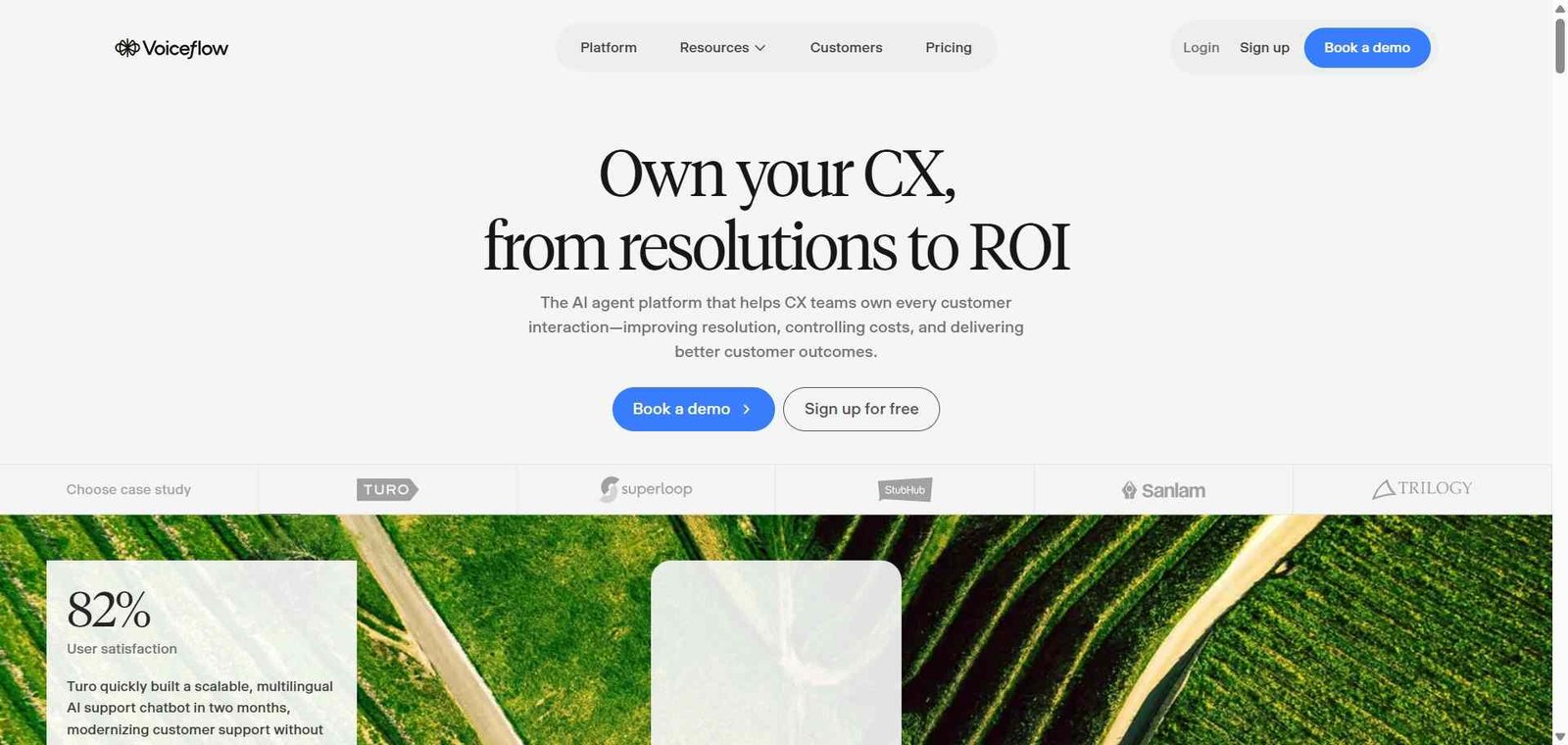
Voiceflow — Better for design-led conversation experience with stronger visual design tools for product teams
Relevance AI — Better for business workflow automation agents, less conversational chatbot focus
Tidio — Better for simple e-commerce live chat with basic AI chatbot, less customisation capability
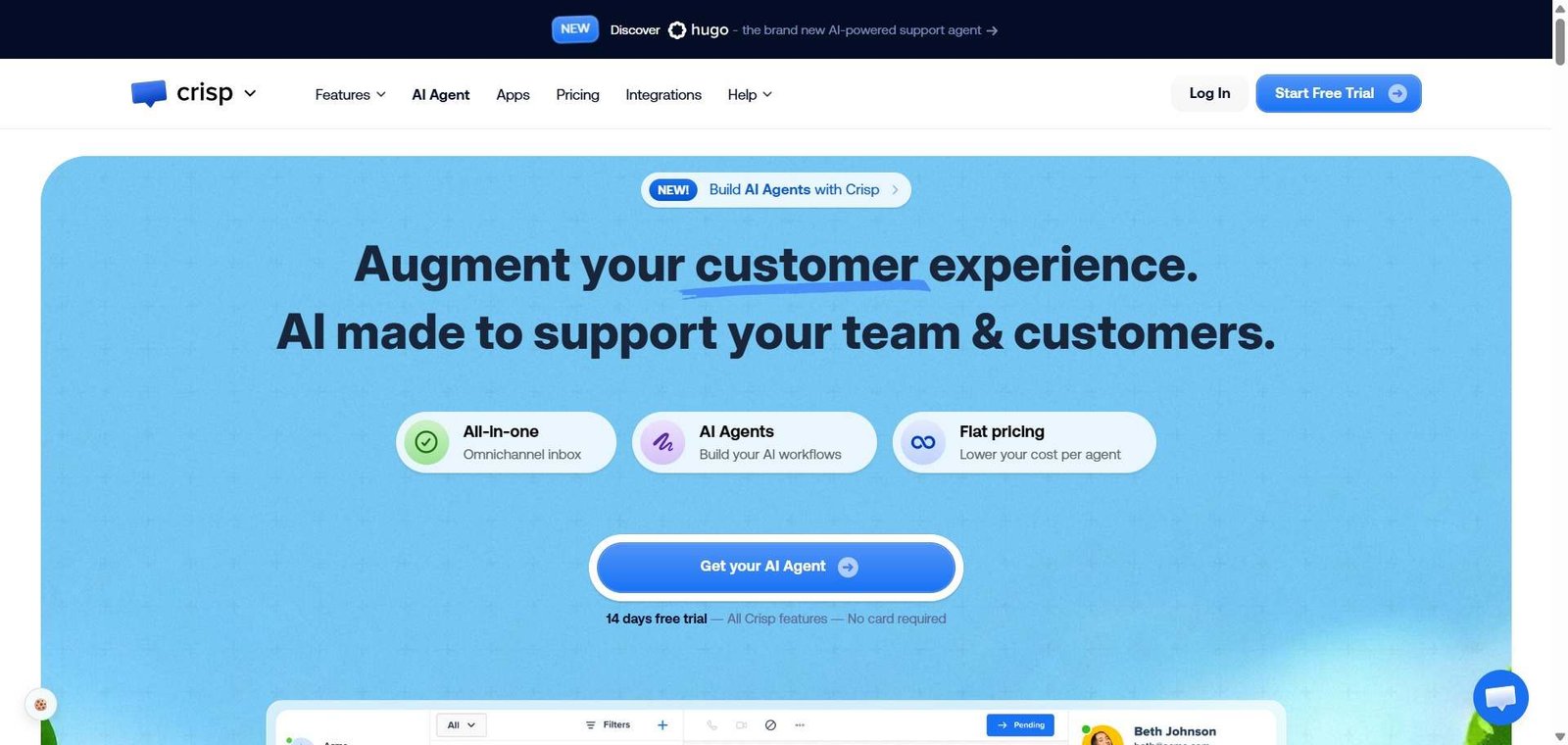
Crisp — Better for simple small business customer messaging, less chatbot sophistication
Frequently Asked Questions (FAQ)
What is Botpress?
Botpress is an open-source LLM-native AI chatbot and virtual agent builder with a visual flow builder, knowledge base RAG, multi-channel deployment, and developer-extensible architecture used by 750,000 plus developers.
Is Botpress free?
Yes, Botpress offers a free cloud plan with up to 5 bots and 2,000 monthly AI-generated messages. The open-source version is free for self-hosting with unlimited usage.
What does LLM-native mean for Botpress?
LLM-native means that Botpress’s architecture is built around large language models at the core — using AI for conversation understanding and generation throughout the platform rather than treating it as a bolt-on feature to a rules-based system.
Can Botpress be self-hosted?
Yes, Botpress is fully open-source and can be self-hosted on any infrastructure — giving organisations complete data control without sending conversation data to third-party cloud services.
What AI models does Botpress support?
Botpress supports OpenAI (GPT-4, GPT-3.5), Anthropic (Claude), and other LLM providers — with the flexibility to choose the model that best fits the bot’s requirements and cost structure.
How does Botpress compare to Voiceflow?
Botpress is developer-focused with open-source extensibility and self-hosting capability. Voiceflow is product-team focused with stronger design collaboration tools and a more polished visual interface. Botpress is better for technical teams who need full control; Voiceflow for product-design-led teams building conversational experiences.
Final Recommendation
Botpress is the most powerful open-source AI chatbot platform available for developers and enterprises who need complete control over their conversational AI infrastructure. The LLM-native architecture, visual flow builder, knowledge base RAG, and self-hosting capability create a chatbot development platform that can handle any use case without the constraints of closed platforms. For technical teams whose chatbot requirements exceed what off-the-shelf solutions provide, Botpress provides the foundation for genuinely sophisticated conversational AI at any scale.