itirupati.com AI Tools

Stable Diffusion

The open-source AI image generation model — run it locally, fine-tune it, own it completely.

Stable Diffusion Review: The AI Image Model That Gave Every Developer Their Own Image Generator

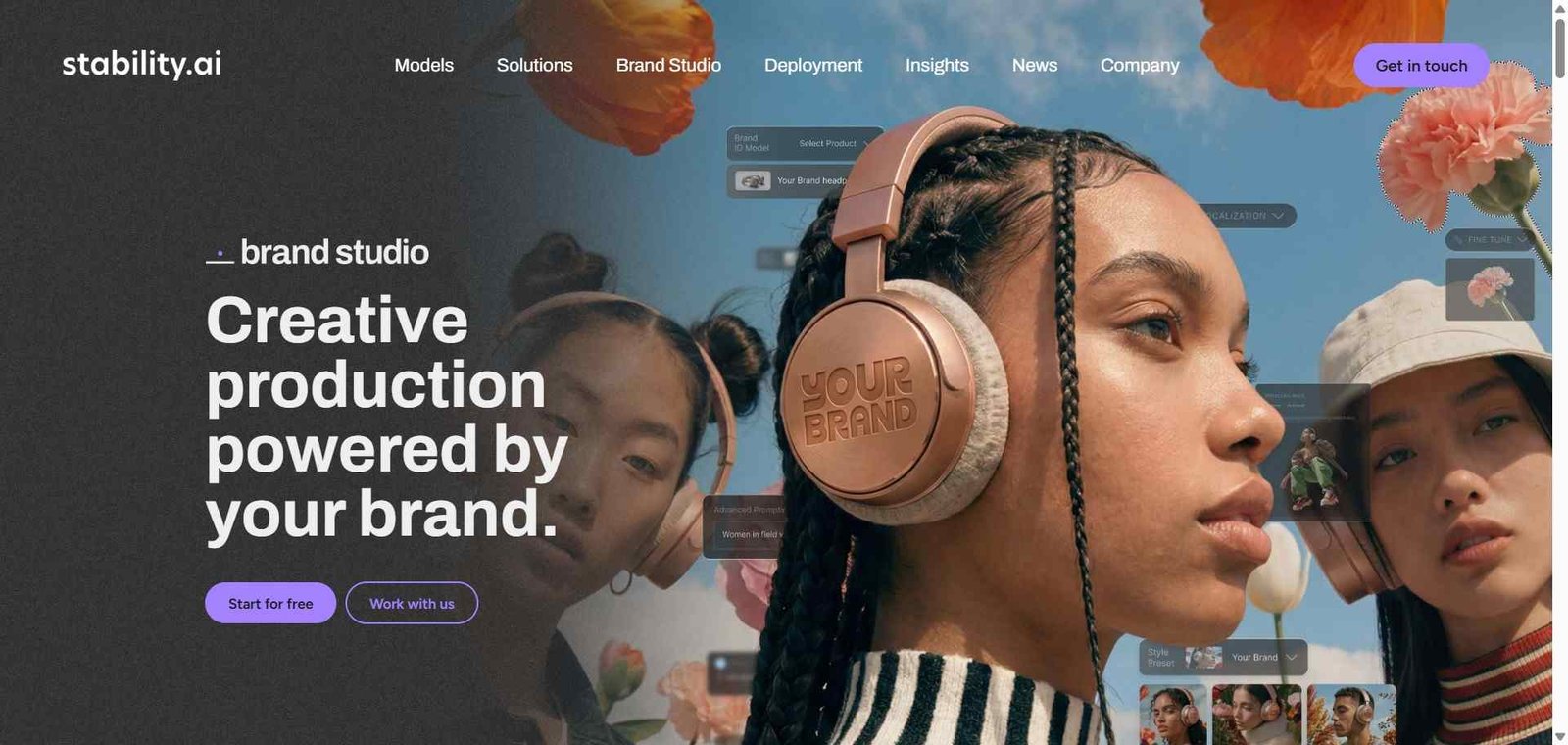
When Stability AI released Stable Diffusion as an open-source model in 2022, it changed the AI image generation landscape permanently. For the first time, any developer, researcher, or enthusiast could download, run, and modify a state-of-the-art AI image generation model on their own hardware — without API costs, usage limits, content restrictions imposed by cloud services, or dependency on any platform’s continued operation. This openness created an entire ecosystem of fine-tuned models, custom interfaces, extensions, and applications that no proprietary alternative could match.

Quick summary

Stable Diffusion is an open-source AI image generation model by Stability AI that generates high-quality images from text prompts — available for local self-hosting, fine-tuning on custom datasets, and commercial use through Stability AI’s DreamStudio platform or community interfaces like Automatic1111 and ComfyUI.

Is it worth using? Yes for developers, AI researchers, designers who need unlimited local image generation, or anyone who wants full control over an AI image model without API costs or content restrictions.
Who should use it? Developers integrating AI image generation into applications, researchers experimenting with AI image models, designers who want unlimited generation without per-image costs, and anyone requiring complete privacy or content control.
Who should avoid it? Non-technical users who need a simple web interface without local setup — Midjourney, Adobe Firefly, or Freepik AI provide better no-setup experiences.

Verdict Summary

Best for

  • Developers building products and applications that require AI image generation without per-API-call costs at scale
  • Designers and artists who want unlimited image generation on their own hardware with complete creative freedom and no content policy restrictions
  • AI researchers and enthusiasts who want to fine-tune models on custom datasets for specific visual styles or subject matter

Not for

  • Non-technical users who need a simple web interface without local installation or configuration
  • Teams who need the highest aesthetic quality out of the box without fine-tuning, where Midjourney’s default output is stronger
  • Users who want collaborative features and a community-curated prompt ecosystem

Rating
⭐⭐⭐⭐½ 4.6 / 5

What Is Stable Diffusion?

Stable Diffusion is a latent diffusion model for text-to-image generation developed by Stability AI in collaboration with academic researchers. The model weights are released under open-source licences that allow free use, modification, and commercial deployment — meaning anyone can download the model, run it locally, fine-tune it on custom image datasets, and build applications on top of it without paying per-generation fees or accepting platform content restrictions.

The model is accessed through multiple interfaces: Stability AI’s own DreamStudio web platform for cloud-based generation, the Automatic1111 WebUI for local installation on consumer hardware, ComfyUI for node-based workflow construction, and countless other community-built tools. The open-source ecosystem around Stable Diffusion includes thousands of fine-tuned model variants — specialized for anime, photorealism, product photography, architecture, and countless other styles.

How Stable Diffusion Works

  • Choose your access method. Use DreamStudio for cloud-based access, install Automatic1111 locally for free unlimited generation on your own GPU, or use any of the community interfaces and hosted services.
  • Write your text prompt. Describe the image you want — subject, style, lighting, composition, and any technical parameters like camera settings or artistic references.
  • Add a negative prompt. Specify what you do not want in the image — common artifacts, unwanted styles, or specific elements to exclude — improving output quality significantly.
  • Adjust generation parameters. Set steps, CFG scale, sampler, and seed to control generation quality and reproducibility of results.
  • Generate and iterate. Generate multiple variations from the same prompt, using img2img to refine promising results by using a generated image as the starting point for further generation.
  • Fine-tune for custom styles. Use LoRA, DreamBooth, or textual inversion fine-tuning to train the model on a custom image set — producing a specialized model that generates images matching a specific style, person, or product consistently.

Key Features

  • Open-source model weights freely downloadable and self-hostable
  • Text-to-image generation from detailed natural language prompts
  • Image-to-image generation for refining and iterating from existing images
  • Inpainting for modifying specific regions within an existing image
  • Outpainting for extending images beyond their original borders
  • LoRA and DreamBooth fine-tuning for custom style and subject training
  • Thousands of community fine-tuned model variants for specific styles
  • ControlNet for precise pose, depth, and composition control
  • Negative prompting for excluding unwanted elements from generation

Real-World Use Cases

  • Developer API integration: A startup integrates Stable Diffusion into their product — running the model locally on GPU servers and generating product images on demand without paying per-image API costs, enabling economics that proprietary APIs cannot match at their usage scale.
  • Brand style fine-tuning: A design agency fine-tunes a Stable Diffusion model on a client’s brand photography — training the model to generate new images that match the client’s established visual identity automatically.
  • Unlimited creative exploration: A concept artist installs Automatic1111 locally and generates hundreds of concept image variations for a character design project — iterating freely without per-image cost concerns affecting creative exploration.
  • Private content generation: A medical imaging research team runs Stable Diffusion locally to generate synthetic training data — keeping sensitive domain imagery entirely within their own infrastructure without any data leaving their systems.

Pros and Cons

ProsCons
Completely free for local use — no per-image costs at any generation volumeLocal setup requires technical knowledge and suitable GPU hardware
Full control over model, fine-tuning, and content — no external restrictionsDefault output quality requires fine-tuned models to match Midjourney’s aesthetic
Largest ecosystem of fine-tuned variants, extensions, and community toolsPrompt engineering learning curve is steeper than simpler hosted alternatives
Complete privacy — generation stays entirely on local hardwareNo collaborative features or shared gallery out of the box
Commercial use permitted under open licence termsQuality heavily dependent on the specific model variant and settings used

Pricing & Plans

Self-hosted — Free
  • Download and run locally on your own GPU
  • Unlimited generation at no cost
  • Full model access and fine-tuning
  • Community support via forums and Discord
DreamStudio (cloud) — Credit-based
  • From $10 for 1,000 credits
  • No local GPU required
  • Web interface access
  • Latest Stability AI models
Stability AI API — Usage-based
  • Pay per image generation for application integration
  • Enterprise pricing available
  • SLA and dedicated support

Best Alternatives & Comparisons

  • Midjourney — Better for highest default aesthetic quality without fine-tuning or technical setup
  • Adobe Firefly — Better for commercially safe generation integrated with Adobe’s creative suite
  • Freepik AI — Better for quick web-based generation with stock library integration, no local setup
  • DALL-E — Better for simple prompt-to-image generation through the OpenAI API without self-hosting

Frequently Asked Questions (FAQ)

What is Stable Diffusion?

Stable Diffusion is an open-source AI image generation model by Stability AI that generates high-quality images from text prompts — available for free local self-hosting, fine-tuning, and commercial use.

Is Stable Diffusion free?

Yes, the Stable Diffusion model weights are free to download and run locally. Cloud access through DreamStudio uses a credit system starting from $10 for 1,000 credits.

What hardware do I need to run Stable Diffusion locally?

A modern NVIDIA GPU with at least 4GB of VRAM can run basic Stable Diffusion models locally. 8GB VRAM provides comfortable generation at standard resolutions. Higher-end GPUs generate faster and support larger model variants.

What is ControlNet in Stable Diffusion?

ControlNet is an extension that adds precise control over generated image composition — allowing you to specify the exact pose, depth map, edge structure, or line art that the generated image should follow, enabling consistent character poses and compositional control that text prompts alone cannot achieve.

How does fine-tuning work in Stable Diffusion?

Fine-tuning trains the base model on a custom set of images to produce a specialized variant. LoRA creates small weight adaptations for specific styles with minimal training data. DreamBooth trains the model to generate a specific subject (person, product, object) from a small image set. Both techniques allow generating consistent custom subjects and styles.

How does Stable Diffusion compare to Midjourney?

Stable Diffusion is open-source and free for local use with complete control and no content restrictions. Midjourney produces higher default aesthetic quality without any technical setup. Stable Diffusion is better for developers, researchers, and power users who want control. Midjourney is better for designers who want beautiful results immediately.

Final Recommendation

Stable Diffusion is the foundational AI image generation technology that powers a significant portion of the AI image generation ecosystem — and accessing it directly gives developers, researchers, and power users capabilities that no hosted platform can match. The combination of zero local generation cost, complete creative freedom, fine-tuning capability, and a vast community ecosystem makes it the tool of choice for anyone whose AI image generation needs go beyond what a simple web interface provides.

Next steps

Feature your app on AI tools for free

Subscribe to our Newsletter

Stay up-to-date with the latest AI Apps and cutting-edge AI news.

Trending Categories