
Dixa
The agentic customer service platform for ecommerce — Mim AI resolves conversations at €0.35 each, no allowance cap, no seat fee for the AI layer.
Dixa Review: The Conversation-First CS Platform That Rebranded Around Agentic AI for Ecommerce in 2026
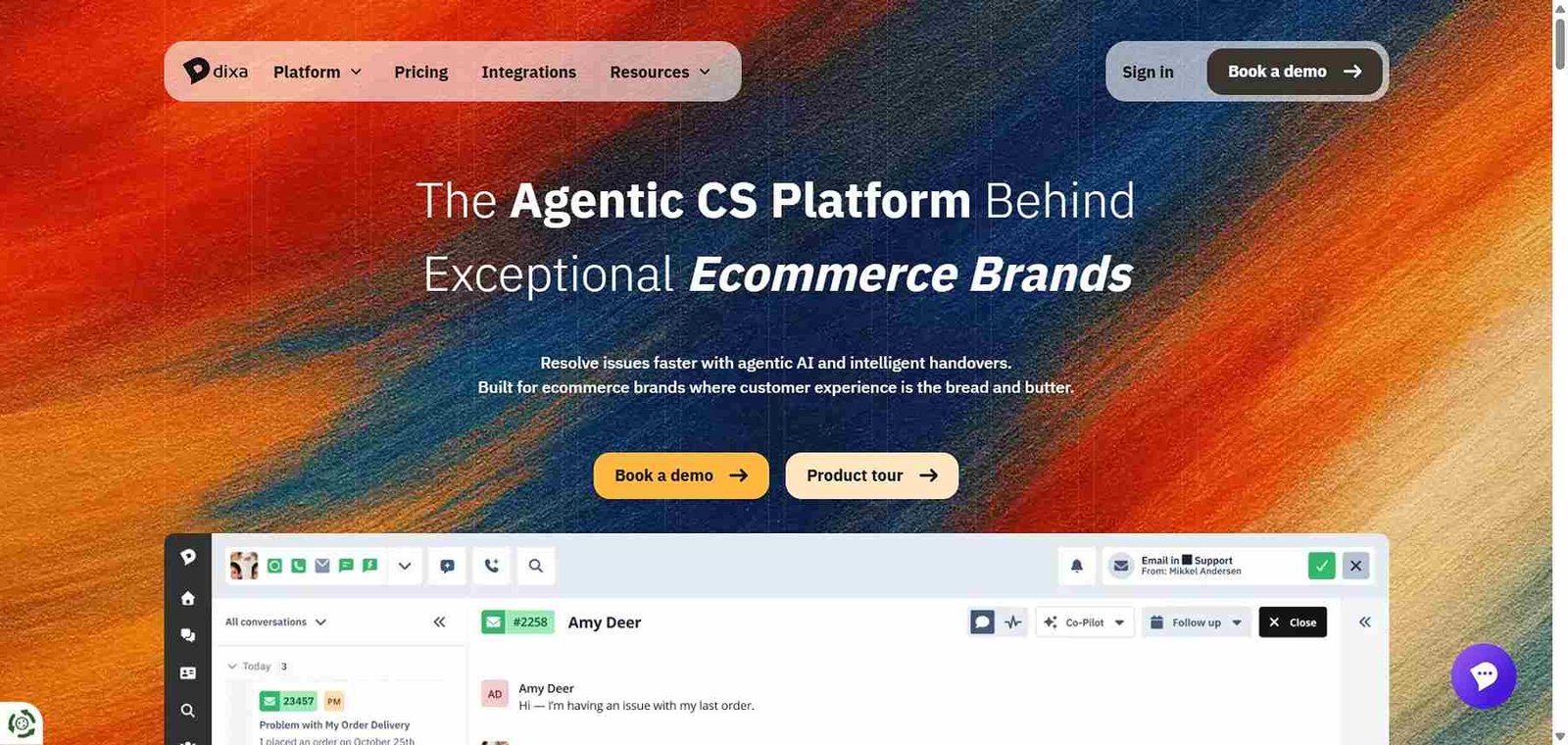
Dixa was built in Copenhagen with a specific thesis — customer service should feel like a conversation, not a ticket. Its “offered” routing model auto-assigns every conversation to the best-matched available agent rather than letting agents cherry-pick from a shared inbox, reducing the wait-time and channel-switching friction that traditional helpdesks produce. In 2026, Dixa rebranded as an agentic CS platform, leaning into Mim — its AI agent that resolves conversations end-to-end at a flat €0.35 per conversation regardless of volume — and AI Co-Pilot that assists human agents in real time. Serving over 850 ecommerce and consumer brands across 42 countries and powering more than 30 million conversations annually, Dixa has positioned itself as the omnichannel helpdesk of choice for brands where support is directly tied to orders, shipping, and customer lifetime value.
Quick summary
Dixa is a Copenhagen-built agentic customer service platform serving 850 plus ecommerce brands across 42 countries — combining a conversation-first omnichannel helpdesk across voice, email, chat, and messaging, Mim AI agent at €0.35 per conversation, AI Co-Pilot for real-time agent assistance, intelligent routing, native voice system, knowledge base, and 40 plus integrations — with three tiers (Growth €89, Ultimate €139, Prime €179 per agent per month on annual billing) and a 7-seat minimum.
Is it worth using? Yes for ecommerce and retail brands handling significant inbound support volume across voice, email, chat, and social who want AI-augmented omnichannel routing and an AI agent that resolves routine conversations at a predictable per-conversation rate rather than a seat-based AI fee.
Who should use it? Customer service managers and CX directors at mid-market ecommerce and retail brands with 7 plus agents handling multi-channel support who want the AI and helpdesk infrastructure in one platform.
Who should avoid it? Very small teams under 7 agents where the 7-seat annual minimum creates a cost floor above what the team needs, and B2B SaaS companies whose support model is account-based relationship management rather than high-volume transactional ecommerce support.
Verdict Summary
Best for
- Ecommerce and retail brands doing significant inbound support volume across voice, email, chat, and social who want a single omnichannel platform rather than stitching together separate tools for each channel — Dixa’s bundled approach includes voice, chat, email, and messaging at entry tier pricing where competitors charge separately for each channel
- Support teams who want AI agent pricing that is predictable regardless of volume — Mim’s €0.35 flat rate per conversation with no allowance cap and no volume surcharge means the AI cost is a linear function of conversations rather than a variable that grows faster than the business
- European mid-market brands with multi-language support requirements who want GDPR-compliant infrastructure with language detection built in from the entry tier
Not for
- Teams under 7 agents where the 7-seat annual minimum floor (approximately €623 per month at Growth tier) creates disproportionate cost relative to team size
- No free trial available — Dixa requires a commercial commitment before hands-on evaluation, which increases decision risk compared to platforms offering trial access
- Outbound-heavy sales teams whose primary workflow is proactive outbound calling rather than inbound support — Dixa is built for inbound customer service, not outbound sales dialling
Rating
⭐⭐⭐⭐ 4.2 / 5
What Is Dixa?
Dixa was founded in Copenhagen in 2015 by ex-Trustpilot employees — launched in 2018 and built around the belief that customer service should be conversation-first rather than ticket-first. The company has raised approximately $158 million including a $105 million Series C led by General Atlantic in 2021, and CEO Christian Lohmann leads the 2026 repositioning around agentic AI.
Mim — Dixa’s AI agent — is the centrepiece of the 2026 rebrand. Priced at €0.35 per conversation at a flat rate with no seat component and no allowance cap, Mim’s pricing model is a direct contrast to Intercom’s $0.99 per AI resolution and Zendesk’s $1.50 to $2.00 per AI resolution — a pricing advantage that compounds significantly for high-volume ecommerce brands. A customer giving up on a resolution without confirming success does not count as a billed outcome — another meaningful differentiator for teams managing high abandonment rates.
How Dixa Works
- Connect channels into one omnichannel inbox. Dixa connects voice, email, live chat, SMS, WhatsApp, and social messaging into a single agent workspace — every conversation across every channel arrives in one view with the customer’s full history.
- Offered routing auto-assigns conversations. Dixa’s “offered” model automatically routes each conversation to the best-matched available agent based on skills, language, and channel priority — eliminating the shared inbox cherry-picking that creates uneven workload distribution.
- Mim AI agent resolves routine conversations. Configure Mim to handle predictable conversation types — order status, returns, account changes, product FAQs — end-to-end without agent involvement, billed at €0.35 per resolved conversation.
- AI Co-Pilot assists human agents. When conversations reach human agents, AI Co-Pilot generates suggested responses, summarises conversation history, recommends next-best actions, and detects sentiment in real time.
- Native voice system handles calls. Dixa’s built-in phone system handles IVR, automatic call distribution, call recording, and callback scheduling — without requiring a separate telephony integration.
- Knowledge base feeds AI and agents. Dixa’s knowledge base provides the content layer that powers Mim’s responses and surfaces relevant articles to human agents during conversations.
Key Features
- Conversation-first omnichannel platform — voice, email, live chat, SMS, WhatsApp, and social in one workspace
- Mim AI agent — end-to-end autonomous conversation resolution at €0.35 per conversation, flat rate, no allowance cap
- AI Co-Pilot — real-time agent assistance with suggested responses, summaries, and next-best actions
- “Offered” intelligent routing — auto-assigns conversations to best-matched agents without shared inbox cherry-picking
- Native voice system — IVR, ACD, call recording, and callback scheduling built in
- Knowledge base for AI-powered and agent-assisted self-service
- Language detection from the Growth entry tier for multi-language routing
- 40 plus integrations including Shopify, Salesforce, HubSpot, Klaviyo, and Magento
- Serving 850 plus ecommerce and consumer brands across 42 countries
- 30 million plus conversations per year on the platform
- Clients include Interflora, On, Wise, Deezer, Rapha, Too Good To Go, Oliver Bonas
Real-World Use Cases
- Ecommerce AI deflection: An online retailer processes 20,000 support conversations per month — 45% are order status and return requests. Mim handles 9,000 conversations automatically at €0.35 each — a €3,150 monthly AI cost for conversations that previously required agent time. The support team maintains headcount while handling 33% more total volume in the following quarter.
- Multi-language routing: A European consumer brand receives support in English, French, German, and Dutch. Dixa’s language detection routes each conversation to an agent matching the language — without a separate routing tool or manual language tagging required from the agent.
- Omnichannel consolidation: A retail brand has voice on one platform, email on another, and Instagram DMs unmanaged. Dixa consolidates all three — agents handle voice, email, and social from one screen with the customer’s full history visible regardless of how they contacted. Average handle time drops as agents stop switching between systems to find context.
- AI Co-Pilot for training speed: A brand with high seasonal agent turnover uses AI Co-Pilot to support newly hired agents — suggested responses and relevant knowledge base articles surface in real time during conversations, reducing the knowledge ramp time from 4 weeks to 10 days for seasonal cohorts.
Pros and Cons
| Pros | Cons |
|---|---|
| Mim AI agent at €0.35/conversation flat rate — no allowance cap, no volume surcharge, customer abandonment not billed — the most transparent AI CS pricing in the category | No free trial — requires annual commitment before hands-on evaluation, increasing decision risk |
| Bundled all-channel support at entry tier — voice, chat, email, and social without per-channel add-on costs that competitors charge separately | 7-seat annual minimum creates an effective cost floor of approximately €623/month — disproportionate for very small teams |
| 850 plus ecommerce brands and 30 million plus conversations annually — strong validated adoption for the target segment | AI features are separate sales-gated add-ons with no public price beyond Mim’s per-conversation rate — full AI cost requires a sales conversation |
| “Offered” routing eliminates shared inbox cherry-picking — more equitable workload distribution and lower response time variance | Multi-year contract terms and upgrade clauses that reset billing periods reported by some users — review contract terms carefully before signing |
| Language detection from Growth tier — multi-language routing without add-on cost for European multi-language brands | Prime tier required for 24/7 global support with advanced routing — entry Growth tier limited to business hours routing |
Pricing & Plans
Growth — €89/agent/month
- Full omnichannel support — voice, email, chat, SMS, social
- Intelligent routing with language detection
- Knowledge base
- Standard reporting
- Email support
Ultimate — €139/agent/month
- All Growth features
- Advanced automation
- AI intent detection (Advanced)
- Custom integrations
- Priority support
Prime — €179/agent/month
- All Ultimate features
- 24/7 global support routing
- Advanced compliance controls
- Dedicated support team
Mim AI Agent — €0.35 per conversation
- Flat rate — no seat fee, no allowance cap
- Customer abandonment not counted as a billed resolution
- Available as an add-on across all platform tiers — pricing confirmed on Dixa’s official pricing page
Monthly billing runs approximately 15 to 20% above annual rates. No free trial available.
Best Alternatives & Comparisons
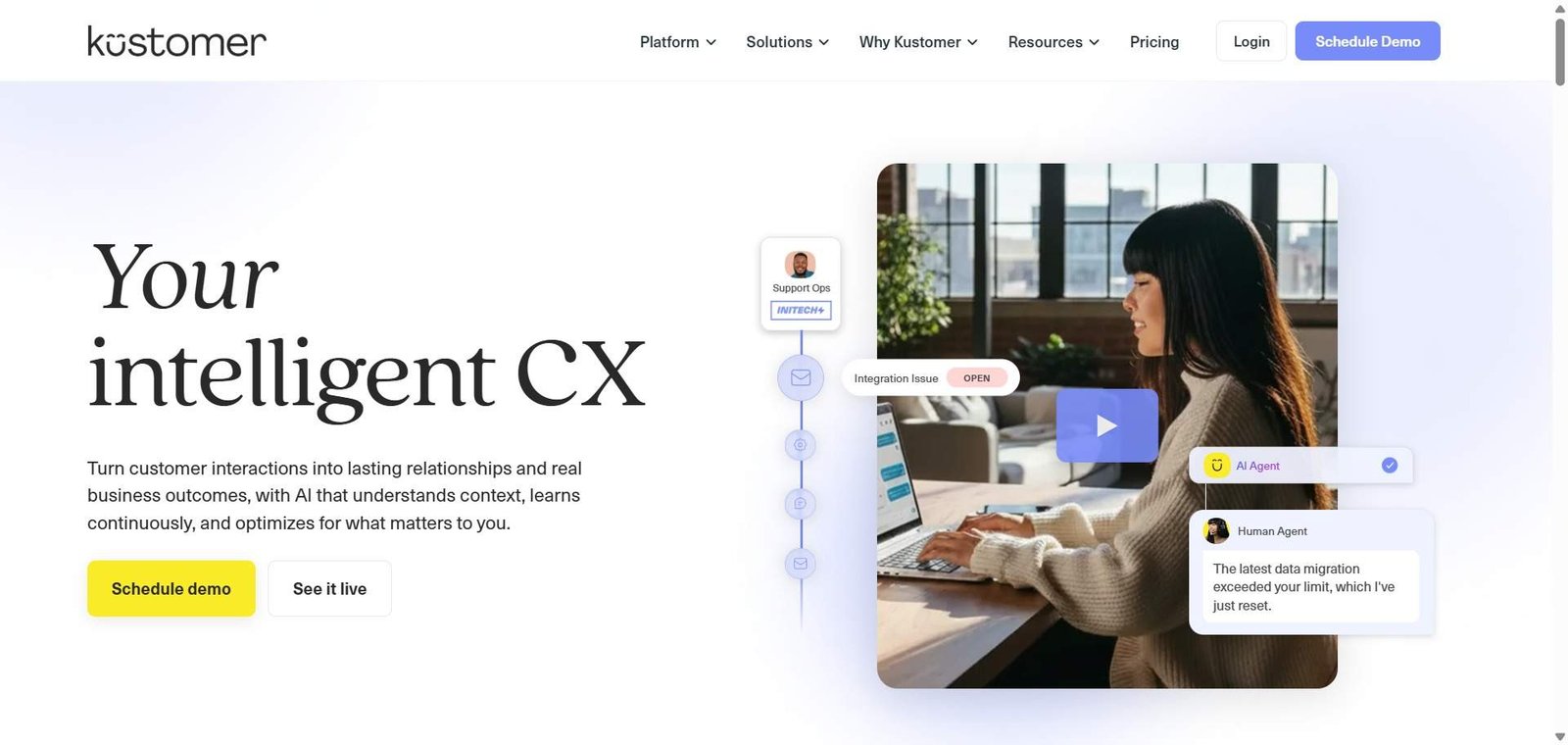
- Kustomer — Better for CRM-first omnichannel support with unified customer timeline for e-commerce and DTC at comparable scale
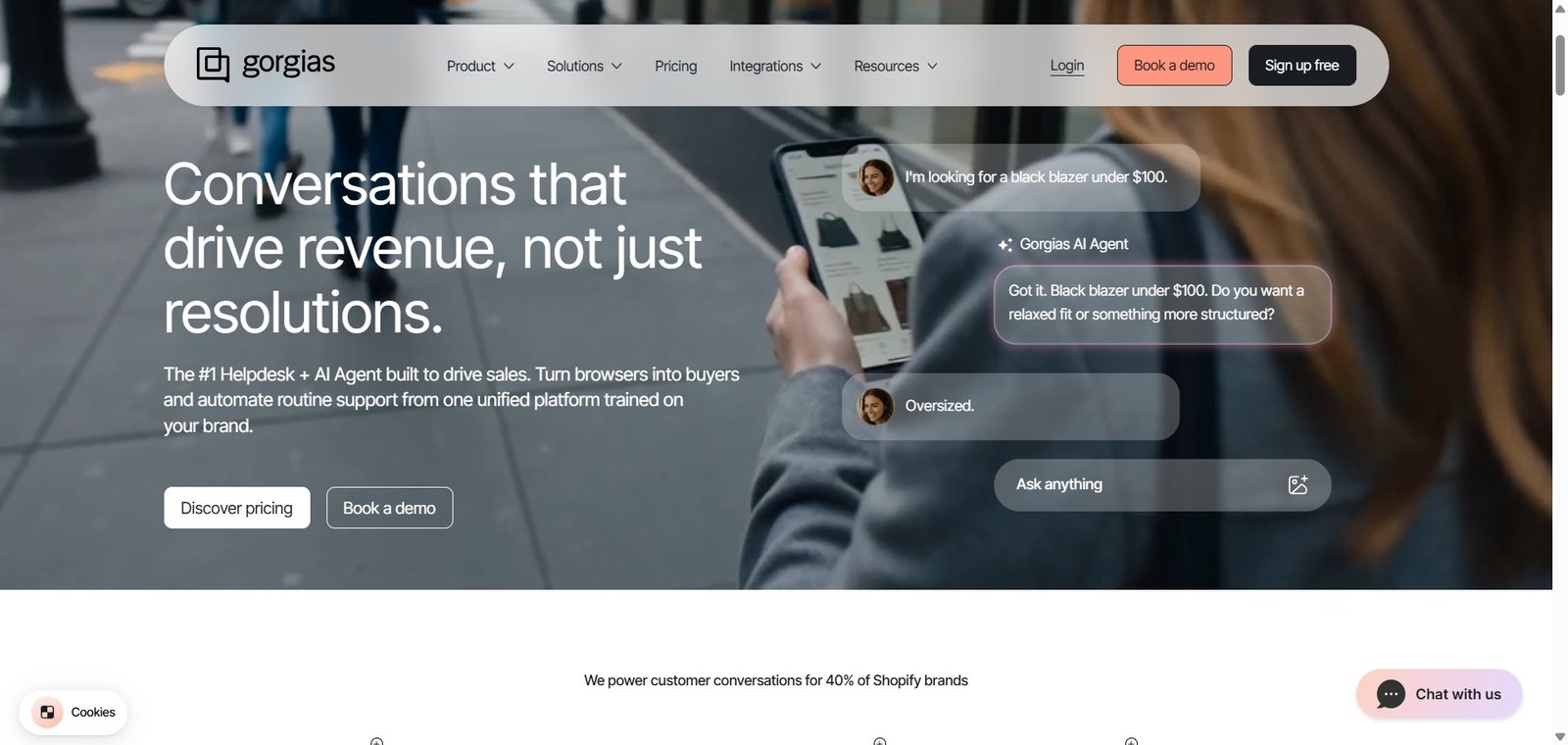
- Gorgias — Better for Shopify-native e-commerce support with unlimited agent seats and deep order management integration
- Zendesk AI — Better for enterprise support at scale with the broadest ecosystem and most extensive integration library
- Hiver — Better for Google Workspace teams wanting Gmail-native support without a new interface
Frequently Asked Questions (FAQ)
Dixa is a Copenhagen-built agentic customer service platform for ecommerce brands — combining omnichannel helpdesk across voice, email, chat, and messaging with Mim AI agent at €0.35 per conversation and AI Co-Pilot for real-time agent assistance, serving 850 plus brands across 42 countries.
Dixa’s platform tiers are €89 (Growth), €139 (Ultimate), and €179 (Prime) per agent per month on annual billing with a 7-seat minimum. Mim AI agent is priced separately at €0.35 per conversation with no allowance cap or seat fee.
Mim is Dixa’s AI agent — resolving customer service conversations end-to-end at a flat rate of €0.35 per conversation, with no seat component, no allowance cap, and no charge when a customer abandons without confirming resolution. It handles routine ecommerce conversations including order status, returns, and FAQs.
No — Dixa does not offer a free trial. All plans require annual contract commitment. Potential customers should request a full demo and pilot arrangement through Dixa’s sales team before signing.
Dixa requires a minimum of 7 agent seats on annual billing — creating an effective cost floor of approximately €623 per month at the Growth tier. Teams smaller than 7 agents should evaluate whether this floor is appropriate for their support volume.
Dixa is conversation-first with an “offered” routing model, bundled all-channel support from entry tier, and Mim AI at €0.35 per conversation — specifically optimised for ecommerce brands. Zendesk is a broader enterprise platform with the largest integration ecosystem and the most extensive feature set at higher per-seat cost. Dixa for ecommerce and retail brands wanting conversation-first AI-augmented omnichannel. Zendesk for enterprise support at scale across diverse business types.
Final Recommendation
Dixa is the most purpose-built agentic customer service platform for ecommerce and retail brands who want AI-augmented omnichannel support without the per-seat AI pricing that makes Intercom and Zendesk’s AI costs unpredictable at volume. Mim’s flat €0.35 per conversation pricing with no allowance cap, combined with bundled all-channel support from the Growth entry tier, creates a cost structure that is genuinely predictable for high-volume ecommerce brands. For any CX leader at an ecommerce brand managing significant support volume across voice, email, chat, and social from multiple separate tools, Dixa provides the conversation-first consolidation that makes omnichannel support operationally simpler and AI-augmented from day one.
Next steps